
UK Solar Forecast to Grow 50% Year-on-Year Again in 2026: A Record-Breaking Year for Solar Power
The UK’s solar energy sector is on the cusp of an unprecedented boom in 2026, with forecasts predicting a staggering 50% year-on-year (YoY) growth for the second consecutive year. This meteoric rise is expected to add approximately 5 to 5.5 gigawatts peak direct current (GWp-dc) of new capacity, solidifying 2026 as the most significant year in the history of UK solar deployment. As the industry accelerates, multiple factors—from technological advancements to policy support—are converging to propel solar into the forefront of the UK’s renewable energy landscape.
The Expanding Role of Ground-Mounted Solar
One of the most notable trends over recent years is the increasing dominance of ground-mounted solar installations. In 2024, ground-mounted systems represented around 60% of the UK’s total solar capacity. This figure jumped to approximately 70% in 2025, reflecting a clear shift in deployment strategies. The advantages of ground-mounted systems—such as higher efficiency, easier maintenance, and scalability—make them particularly attractive for large-scale projects.
Forecasts indicate this trend will continue into 2026, with ground-mounted projects remaining the primary growth driver. Developers are increasingly favoring large, utility-scale solar farms, especially on previously underutilized land or brownfield sites, which not only expedite permitting processes but also minimize land-use conflicts. This shift aligns with the UK government’s broader strategy to maximize renewable capacity while balancing land use considerations.
Record-Breaking Growth in Residential and Commercial Rooftops
While utility-scale ground-mounted systems lead the market, the residential rooftop segment continues to grow rapidly. In 2025, residential rooftop solar installations experienced their best year on record, with a 25% YoY increase. This growth is driven by falling system costs, supportive policies, and increasing consumer awareness of the economic and environmental benefits of solar energy.
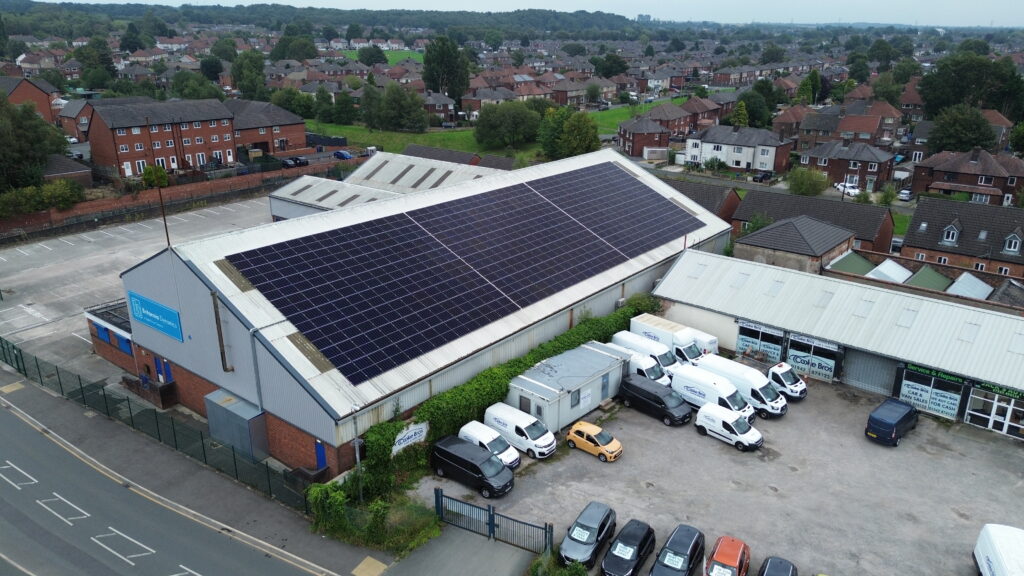
Residential solar now accounts for roughly 18% of the UK’s total capacity, with the solar commercial rooftops sector making up the remaining share. The expansion of rooftop solar is pivotal for decentralizing energy generation, reducing transmission losses, and empowering consumers and businesses to produce their own clean energy.
Additionally, innovative financing models, such as solar leasing, power purchase agreements (PPAs), and government-backed schemes like the Smart Export Guarantee (SEG), are lowering barriers for homeowners and small businesses to adopt solar. The UK government’s focus on energy efficiency and decarbonization further bolsters this segment’s growth prospects.

Challenges in Grid Infrastructure and Connection Delays
Despite the optimistic outlook, significant challenges could temper the pace of growth—most notably, grid connection issues. The UK’s electricity grid infrastructure is under strain, with increasing capacity additions exposing bottlenecks in transmission and distribution networks.
Some developers have begun construction on projects assuming imminent connection approvals, but many are facing delays. The continuous pushback and extension of firm connection dates—particularly for projects scheduled for connection in Q4 2026—are causing considerable uncertainty. Projects with protected status are not immune; even they face delays that threaten their timelines and financial viability.
The UK government and National Grid are actively working to address these issues by investing in grid upgrades and expanding interconnection capacity. However, the pace of these developments may not match the rapid deployment of solar projects, potentially leading to curtailment risks or project cancellations if connection timelines cannot be met.
Policy Support and Strategic Roadmap for Sustained Growth
The UK’s government has committed to ambitious renewable energy targets, with a clear roadmap to reach 45–47 GW of solar capacity by 2030. This plan emphasizes concrete steps to accelerate deployment, including streamlining planning processes, expanding auction schemes, and providing financial incentives.
A recent government spokesperson highlighted that “the roadmap provides clarity and confidence for developers, investors, and installers to scale up deployment, ensuring that solar remains a cornerstone of the UK’s energy transition.” By moving beyond initial pledges and laying a solid foundation for sustained growth, policymakers aim to create a stable environment conducive to long-term investments.
Furthermore, the UK’s Clean Growth Strategy emphasizes the role of solar in meeting net-zero commitments, integrating solar into broader energy systems, and fostering innovation in storage and hybrid systems.
Solar’s Vital Role in Meeting Near-Term Power Demand
Despite some setbacks experienced in 2025, the fundamentals supporting solar’s continued expansion remain strong. Global trends indicate a surge in electricity demand driven by sectors such as data centres, manufacturing, and transportation electrification—particularly in the US, China, and Asia Pacific.
In the UK, energy demand is projected to grow steadily as industries transition to low-carbon operations. Solar energy is expected to be a primary contributor to meeting this increasing demand, especially during peak sunlight hours, thereby reducing reliance on fossil fuels and decreasing carbon emissions.
The proliferation of energy storage solutions—such as batteries—will also play a critical role in balancing supply and demand, enabling solar to deliver reliable power even when the sun isn’t shining. The integration of smart grids and digital technologies will further optimize solar energy utilization across the UK.
Global Outlook: Tripling Capacity by 2034
On a global scale, solar capacity is on an extraordinary trajectory. Worldwide, total installed solar capacity is projected to nearly triple—from nearly 3 terawatts direct current (TWdc) today to approximately 8 TWdc by 2034. This growth underscores solar’s pivotal role in the global energy transition, driven by declining costs, technological innovation, and ambitious climate commitments from governments and corporations.
Regions like the US, China, India, and the European Union are leading this expansion, investing heavily in utility-scale solar farms, floating solar, and innovative storage solutions to meet their climate goals.
Conclusion
The UK’s solar market is entering an era of unprecedented growth, with 2026 set to be a landmark year. The combination of increasing ground-mounted projects, record-breaking rooftop installations, and supportive policy frameworks positions solar as a central pillar of the UK’s renewable energy future.
However, challenges such as grid connection delays and infrastructure bottlenecks must be addressed to sustain this momentum. Strategic investments, policy reforms, and technological advancements are vital to overcoming these hurdles.
As the UK aims for a decarbonized energy system by 2030 and beyond, solar energy will undoubtedly play a vital role in powering a cleaner, more resilient, and sustainable future. With global capacity expected to nearly triple in the next decade, the momentum behind solar is undeniable, promising a brighter and more sustainable energy landscape worldwide.
Contact Energy Gain UK – we’re here to help you optimise your energy strategy and reduce costs and build a more sustainable energy.
☎️ 0161 330 7739 | ✉️ info@energygain.co.uk
