

Plug-In Solar Panels UK: Can Businesses Use Plug IN Solar?
Plug-in solar panels are now available in Great Britain, giving households a simpler way to generate electricity from the sun. But what does this mean for businesses?
If you have seen the recent coverage around plug-in solar, plug-and-play solar or balcony solar, you may be wondering whether the same technology could be used to reduce your business’s electricity costs.
The short answer is that plug-in solar is designed around relatively small-scale electricity generation. For most commercial properties, a professionally designed commercial solar PV system is likely to be a more appropriate way to generate a meaningful amount of electricity on site.
In this blog we explain what plug-in solar is, how it works and what businesses need to know.
What is plug-in solar?
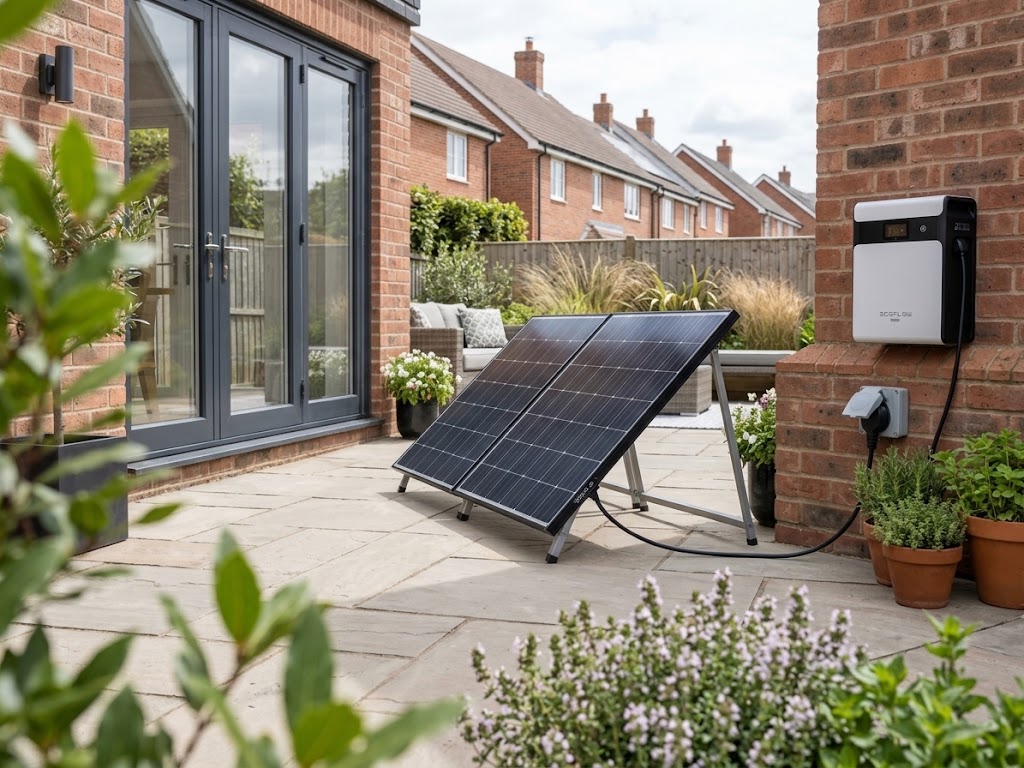
Plug-in solar is a small solar PV system that connects to a standard electrical socket rather than being permanently wired into a property’s electrical system.
The system typically consists of solar panels and a microinverter. The solar panels generate DC electricity from sunlight, while the microinverter converts this into AC electricity that can be used by the building.
Unlike a conventional commercial solar installation, the system is designed to be relatively simple to install and can be connected through a standard socket.
Plug-in solar is also sometimes referred to as:
- Plug-and-play solar
- Balcony solar
- Plug-in PV
- Socket-connected solar
- Plug-in solar panels
The technology has been used in other European markets for several years and has now been introduced to Great Britain.
Are plug-in solar panels legal in the UK?
Plug-in solar became legally available in England, Scotland and Wales from 27 August 2026, subject to the relevant product and electrical requirements.
The Government’s framework was introduced to provide consumers with a simpler way of generating renewable electricity at home. Compliant products must meet the specified safety requirements and connection rules.
However, it is important to distinguish between plug-in solar designed for domestic use and a properly engineered commercial solar PV installation.
The systems are deliberately limited in size. Current guidance refers to a maximum AC output of around 800W per plug-in device. For a business with significant electricity consumption, this is unlikely to make a substantial difference to overall energy costs.
How does plug-in solar work?
The principle is similar to a conventional solar PV system.
- Solar panels generate electricity
Solar panels convert sunlight into DC electricity.
- A microinverter converts the electricity
The microinverter converts the DC electricity into AC electricity that can be used by electrical equipment within the property.
- Electricity enters the building
With plug-in solar, the electricity is connected through a standard socket rather than through a conventional hardwired solar installation.
- Your building uses the electricity
The electricity generated can help meet electricity demand at the time it is being produced.
If the building requires more electricity than the solar system is generating, electricity continues to be supplied from the grid.
This is broadly the same principle as commercial solar: generate electricity on site and use it to reduce the amount of electricity purchased from the grid.
The major difference is the scale of the system
Can businesses use plug-in solar?
This is where the distinction between domestic and commercial solar becomes important.
A small business operating from a property with a domestic-style electricity connection may potentially have a use case for a compliant plug-in solar system.
However, for most businesses, the relatively small output means that plug-in solar is unlikely to make a significant impact on overall electricity consumption.
Consider a business operating a manufacturing facility, warehouse or engineering site.
Electricity may be being used for:
- Manufacturing equipment
- Machinery
- Compressors
- Lighting
- HVAC
- Refrigeration
- IT equipment
- Production processes
- Electric vehicles
- Office equipment
An 800W solar device is very small in comparison with the electricity requirements of these types of sites. The biggest difference is scale.
The Energy Saving Trust describes plug-in solar as a lower-cost alternative for people who cannot install a conventional rooftop solar system, while also noting that rooftop systems are larger and generate more energy.
For a business with a large roof, warehouse, factory or industrial site, that distinction is particularly important.
How much electricity does commercial solar generate?
Commercial solar can be designed around the individual building and its electricity requirements.
For example, a system could be assessed based on:
- Available roof area
- Roof orientation and pitch
- Shading
- Structural considerations
- Annual electricity consumption
- Daytime electricity demand
- Existing electrical infrastructure
- Grid connection capacity
- Future electricity requirements
Rather than installing a small standardised system, a commercial solar project can be engineered to make effective use of the available site.
This means the starting point for a business should be its energy consumption and site, rather than a particular solar product.
Explore our Knowledge Centre → for practical advice and guidance on commercial solar PV.
Why does daytime electricity use matter?
One of the key factors when assessing commercial solar is when your business uses electricity. Solar generation is naturally concentrated during daylight hours.
Businesses operating during the day can therefore have an opportunity to use a significant proportion of their solar generation directly on site. For example, a manufacturing facility operating Monday to Friday may have substantial electricity demand during the same period that its solar PV system is generating electricity. This can reduce the amount of electricity the business needs to purchase from the grid.
The exact benefit depends on the site’s electricity consumption profile, tariff, system size, generation profile and other project factors.
Could plug-in solar be useful for a business?
There are circumstances where a small plug-in system could have a niche application.
However, businesses should consider the scale of their electricity consumption before assuming that plug-in solar will provide a meaningful financial benefit.
For example, a small office with relatively low electricity consumption is very different from a manufacturing facility operating energy-intensive machinery. For larger energy users, increasing the scale of generation is generally where commercial solar becomes more relevant.
What should a business consider before investing in solar?
Rather than starting with a particular type of solar panel, businesses should consider the wider energy picture.
- How much electricity does the business use?
Review annual electricity consumption and, where possible, understand how much electricity is being used throughout the day.
- When is electricity being used?
A business using significant amounts of electricity during daylight hours may have a strong opportunity to utilise on-site solar generation.
- How much suitable roof or land is available?
The available space will influence the potential size of the solar PV system.
- Can the existing electrical infrastructure accommodate the system?
A technical assessment is required to understand the site’s electrical requirements and potential grid connection.
- What is the financial case?
A commercial solar assessment should look beyond the initial installation cost.
It can consider potential electricity savings, generation, system size, project costs and expected return over the system’s operating life.
- Could the business benefit from other technologies?
Depending on the site’s requirements, solar could potentially be considered alongside technologies such as battery storage or solar carports.
The appropriate solution will depend on the individual site.
Is commercial solar better than plug-in solar?
Plug-in solar and commercial solar are not competing solutions at the same scale.
Plug-in solar provides a relatively simple way for households and small-scale users to generate a modest amount of electricity.
Commercial solar is a site-specific engineering solution designed to generate substantially more electricity and address the energy requirements of a business.
For a business with a large electricity bill and suitable roof or land, the important question is therefore not simply whether plug-in solar is available.
It is whether the business could generate a meaningful proportion of its electricity on site through a properly designed commercial solar PV system

How Energy Gain can help
At Energy Gain UK, we take an engineering-led approach to commercial solar.
Our team can assess a business’s electricity consumption, available roof or land and project requirements to establish whether solar could be suitable for the site.
We provide a free detailed desktop feasibility study, which can include a 25-year cash flow analysis to help businesses understand the potential financial case for a solar PV system.
The assessment can consider:
- Potential system size
- Estimated electricity generation
- Electricity savings
- Project costs
- Financial returns
- Site considerations
- Potential grid requirements
This provides businesses with a clearer starting point before deciding whether to progress with a commercial solar project.
Want to find out whether solar could work for your business?
Contact Energy Gain UK to discuss your project →
