

Commercial Rooftop Solar: Could Your Roof Be Doing More?
More than 90% of suitable commercial roof space in the UK is still without solar, highlighting the significant potential for businesses to generate more of their own electricity.
A recent report estimates that UK commercial rooftops could provide more than 60GW of solar generation if suitable available space were fully utilised.
For businesses with large warehouses, manufacturing facilities, offices and other commercial buildings, this raises an important question:
Could your commercial roof be doing more?
However, installing commercial solar panels isn’t simply a case of using as much roof space as possible. The right system needs to be considered alongside your business’s electricity consumption, daytime energy demand, roof condition, grid capacity and the financial return of the project.
How much solar could a commercial roof generate?
The amount of solar that can be installed on a commercial roof will depend on a number of factors.
Available roof area is an obvious starting point, but it isn’t the only consideration. Roof orientation, pitch, shading, structural requirements, access and existing equipment can all influence the amount of usable space.
This means that two buildings with a similar roof size could have very different solar potential.
A commercial solar feasibility study can help determine how much solar PV could realistically be installed and what the expected generation could be.

Commercial solar should start with your energy consumption
When considering commercial rooftop solar, it’s important to look at the energy needs of the business as well as the available roof space.
Your electricity consumption can help determine an appropriate system size and how much of the solar generation could potentially be used directly on site.
For example, a manufacturing facility operating throughout the day may have significant electricity demand during the same hours that solar panels are generating electricity.
Understanding this relationship between solar generation and energy consumption is an important part of assessing the potential financial benefits of a system.
When does your business use electricity?
Solar panels generate electricity during daylight hours, so understanding when your business uses energy is particularly important.
A business with consistent daytime electricity demand may be able to use a significant proportion of its solar generation directly on site.
Other businesses may have lower daytime demand, seasonal variations or operations that extend into the evening and night.
This doesn’t necessarily mean solar isn’t suitable. It simply means the system needs to be designed around the specific characteristics of the site.
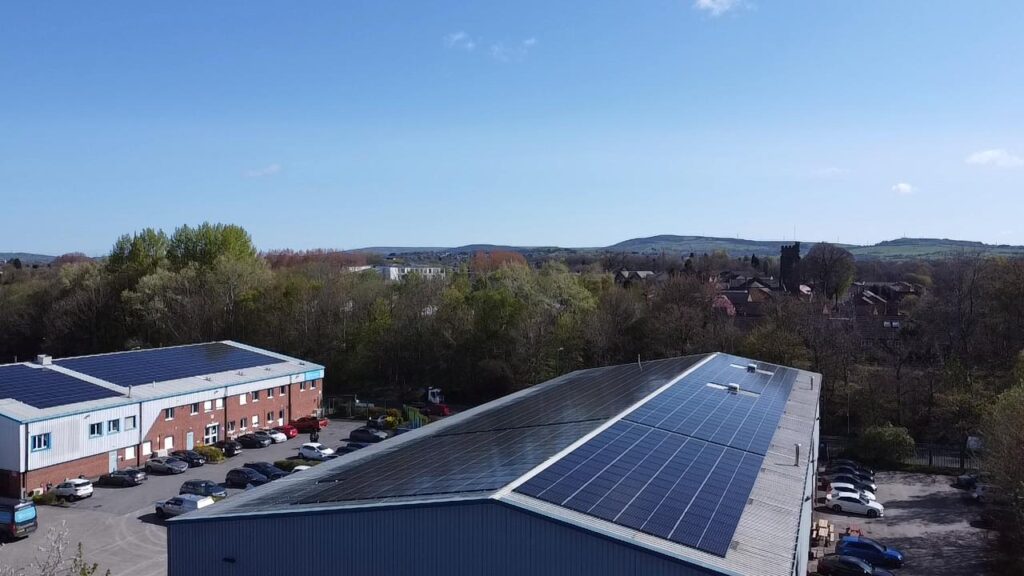
Is your commercial roof suitable for solar panels?
Having a large roof doesn’t automatically mean the entire area can be used for solar.
Before installing solar panels for a warehouse, factory or other commercial building, several factors need to be considered, including:
- Roof condition and expected lifespan
- Available roof area
- Roof orientation and pitch
- Shading from surrounding buildings or structures
- Existing roof equipment and obstructions
- Structural considerations
- Access and installation requirements
- Planning or other project considerations
The condition and remaining lifespan of the roof can be particularly important. If significant roof work is likely to be required in the near future, this may need to be considered before installing a solar PV system.
If you’re considering solar for a commercial building, our Commercial Rooftop Academy provides practical guidance on assessing a site and planning a commercial solar PV system.
→ Explore the Commercial Rooftop Academy
How much solar can you install on a commercial roof?
There isn’t a single answer to how much solar can be installed on a commercial roof.
The potential system size will depend on the characteristics of the building and the site’s electricity requirements, as well as electrical and grid considerations.
While a larger system can generate more electricity, the largest system possible isn’t necessarily the most appropriate option for every business.
A feasibility assessment can help establish a suitable system size based on factors including:
- Available roof space
- Expected solar generation
- Electricity consumption
- Daytime energy demand
- Grid connection requirements
- Project costs
- Potential electricity savings
- Expected financial returns
This allows businesses to consider the overall business case rather than simply the number of panels that could physically fit on the roof.
Want to get an initial idea of your solar potential? → Try our Solar ROI Calculator to explore potential system size, generation and savings for your business.
What about grid capacity?
Grid capacity is another important consideration for larger commercial solar PV projects.
The proposed system may need to be assessed in relation to the site’s existing electrical infrastructure and grid connection. Depending on the project, this can influence the amount of electricity that can be exported to the grid and may affect the overall system design.
Considering grid requirements at an early stage can therefore help businesses understand what is realistically achievable before progressing with a project.
Does commercial solar make financial sense?
For most businesses, the financial case is an important part of the decision to invest in solar.
The potential return from a commercial solar installation can depend on factors such as:
- Current electricity costs
- Annual electricity consumption
- Solar generation
- The proportion of electricity used on site
- System size and installation costs
- Export arrangements
- Future energy costs
A detailed financial assessment can help businesses understand the potential savings and expected return over the lifetime of the system.
At Energy Gain UK, our feasibility studies include a 25-year cash flow analysis, helping businesses assess the potential long-term financial impact of a proposed solar PV system.

The opportunity for commercial rooftop solar
The potential for commercial rooftop solar in the UK is significant, with a large proportion of suitable roof space still without solar.
For businesses, however, the opportunity isn’t simply about putting as many panels as possible on a roof.
The more important question is:
What solar system makes sense for your business?
The answer will depend on your building, your electricity consumption, your operating hours, the available roof space, grid requirements and the financial case for the project.
A properly designed commercial solar PV system should be based on the specific requirements of the site rather than a one-size-fits-all approach.
Find out what your commercial roof could do
If you’re considering solar for a warehouse, factory, office or other commercial property, Energy Gain UK can assess the potential of your site through a detailed desktop feasibility study.
We’ll look at your available roof space, electricity consumption and other key factors to establish a potential system size, estimated generation, savings and long-term financial return.
Could your commercial roof be doing more?
Considering solar for your commercial property? Our team can assess your site and provide a detailed feasibility study covering system size, generation, savings and potential financial returns
