
Commercial Solar for Office Buildings
Commercial solar helps office-based businesses generate renewable electricity, reduce grid reliance and manage energy costs, with rooftop solar and carports supporting sustainability goals.

Reduce Energy Costs
Generate electricity on-site to help offset the power used by lighting, IT equipment, heating, ventilation and air conditioning.

Support Sustainability Goals
Generate renewable electricity, reduce operational carbon emissions and support ESG commitments and corporate sustainability targets.

Plan for Future Energy Demand
Integrate solar into your wider building strategy, considering future electricity demand, EV charging and potential property improvements.

Commercial Solar for Office Buildings
Office buildings have varied energy requirements, from individual business premises and professional services offices through to corporate headquarters, multi-storey offices and large commercial estates. Each property has different operating patterns, electrical infrastructure and available space, so commercial solar needs to be assessed around the individual building and its electricity consumption.
Electricity is typically used for lighting, computers, servers, heating, ventilation, air conditioning, lifts, kitchen facilities and other building services. Larger offices may also have substantial demand from data rooms, conference facilities and shared amenities.
Many offices have their highest electricity demand during working hours, which can align well with solar generation. However, consumption varies depending on occupancy, building design, cooling requirements and whether the property operates outside standard business hours.
Potential solutions include commercial rooftop solar and solar carports where suitable parking areas are available. For businesses managing multiple buildings, assessing the wider estate can help identify properties with the strongest technical and financial opportunities.
The Energy Challenge for Office Buildings
Energy is an important operating cost for businesses occupying offices, particularly buildings with extensive lighting, IT infrastructure, air conditioning and other electrical services.
Electricity price fluctuations can make it more difficult for businesses and property managers to forecast operating expenditure. At the same time, organisations are increasingly considering how their buildings contribute to carbon emissions, sustainability targets and wider ESG commitments.
Commercial solar offers an opportunity to generate renewable electricity directly at the property, helping offset grid electricity purchases and support long-term energy cost management.
For owner-occupied offices, the benefits may include reduced electricity expenditure and lower operational emissions. For landlords and commercial property owners, solar may also contribute to wider building improvement and tenant sustainability strategies, although the financial benefits will depend on how electricity costs and savings are allocated between landlords and occupiers.
The Cost of Doing Nothing
The financial case for commercial solar should consider not only the initial investment, but also the ongoing cost of purchasing electricity from the grid.
For offices with substantial daytime electricity demand and suitable roof space, continuing to purchase all electricity from the grid may mean missing opportunities to generate renewable power on-site and reduce operating costs.
Solar can also support wider property objectives, including carbon reduction, environmental reporting and tenant sustainability requirements.
Energy Gain’s financial modelling compares the proposed solar investment with the cost of continuing to purchase electricity, helping businesses understand potential savings, payback and long-term financial returns.
Funding options, including capital purchase, finance and power purchase agreements (PPAs), can also be assessed where appropriate.
Solar Solutions for Office Buildings
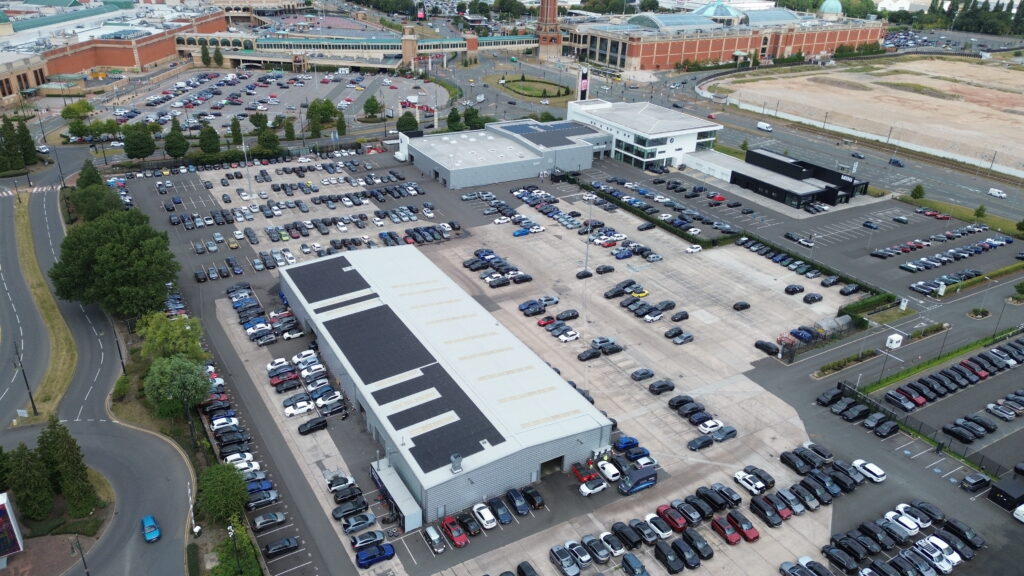
Rooftop Solar
Make use of available commercial and industrial roof space.
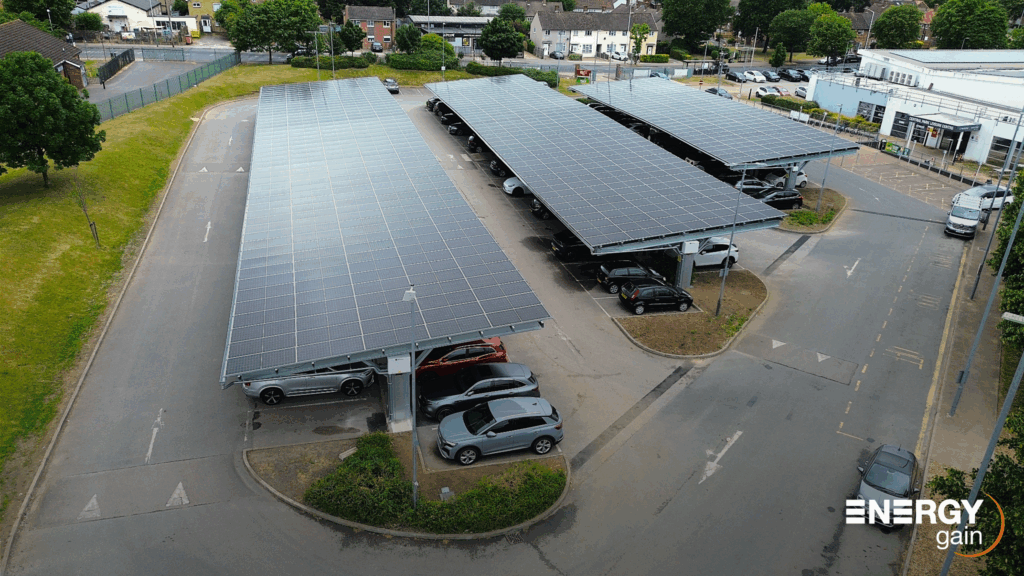
Solar Carports
Turn existing parking areas into solar generation space.
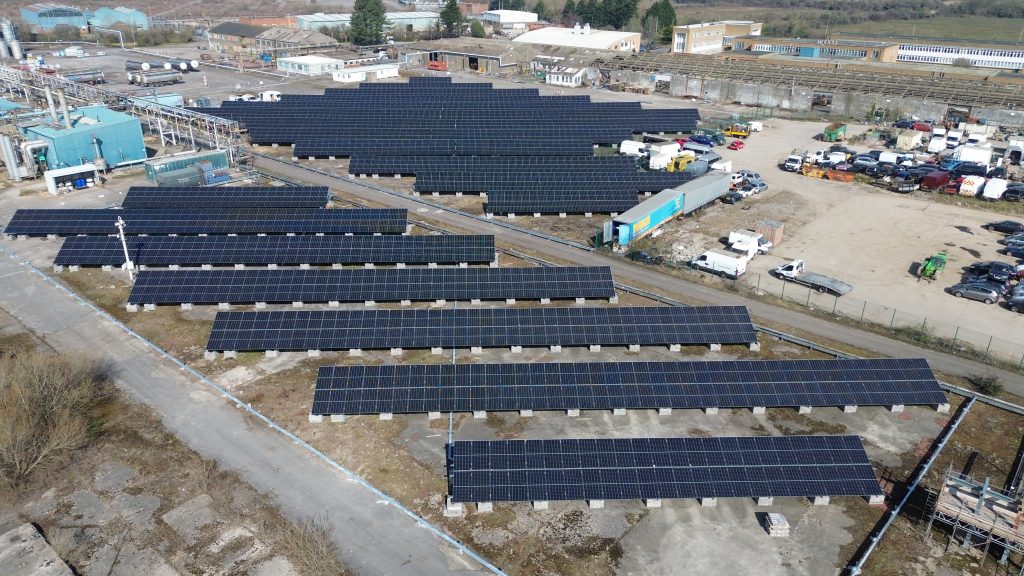
Ground-Mounted Solar
Utilise suitable land where additional generation is required.
EV Charging
Consider future charging demand alongside the site’s wider energy requirements.

Office and Commercial Buildings
Energy Gain UK designs and delivers commercial solar PV systems for businesses across the UK, including organisations operating commercial buildings, offices and multi-site estates.
Our approach starts with an assessment of the property’s electricity consumption, available roof space, electrical infrastructure and operational requirements. This helps establish whether rooftop solar or another suitable solution could reduce reliance on grid electricity and support the organisation’s financial and sustainability objectives.
For office buildings, the assessment considers how electricity is used throughout the working day, including lighting, IT systems, ventilation, air conditioning and shared facilities.
Key considerations include:
Available roof space and structural suitability
Daytime electricity demand
Expected solar generation
Potential electricity cost savings
Building ownership and electricity billing arrangements
Future requirements, including EV charging
Solar for Commercial Property Owners and Landlords
For landlords and businesses managing commercial property portfolios, solar can be considered as part of a wider building improvement strategy.
Assessing multiple properties together can help identify which buildings have suitable roofs, sufficient electricity demand and the strongest potential financial returns.
However, the commercial arrangements are important. Where occupiers pay their own electricity bills, the benefits of on-site generation may not automatically translate into direct savings for the landlord. Electricity supply arrangements, lease terms and any agreed cost-sharing mechanisms should therefore be considered before investment.
Energy Gain can assess individual buildings or multiple sites to help establish the technical and financial potential for commercial solar.
Case Study: CDL Software, Stockport
CDL is a leading provider of software solutions for high-volume insurance operations. When the company developed two purpose-built office buildings in Stockport, planning requirements meant that panels were needed around the roof perimeter to screen ventilation and air conditioning equipment.
Working with Energy Gain UK, CDL turned this requirement into an opportunity to generate renewable electricity. Instead of installing decorative panels, the company opted for a solar wraparound system integrated into the building’s design, including its data centre.
The installation helped CDL reduce its reliance on grid electricity while making productive use of the building’s perimeter. Energy Gain subsequently completed a further solar installation for CDL, reducing its grid reliance by an additional 25%.
The Benefits
Integrated building design: Solar panels were incorporated into the building’s perimeter to meet a planning requirement while generating electricity.
Reduced grid reliance: On-site solar generation helps offset the electricity required by CDL’s offices and data centre.
Long-term value: The installation was designed to provide renewable electricity and financial benefits over the long term.
The CDL project demonstrates how commercial solar can be tailored to the design and energy requirements of office buildings, corporate headquarters and data-intensive facilities.

Our Commercial Solar Panel Projects
Financial Modelling Should Reflect the Real Site
The financial assessment for an office building should use actual electricity consumption and site-specific information wherever possible.
Energy Gain’s modelling considers:
Historic electricity consumption and costs
Half-hourly electricity data
Building operating hours and occupancy
Forecast solar generation
System degradation
Maintenance assumptions
Future electricity prices
Self-consumption and export
Available funding options
This produces a cash-flow model that can be used to assess potential savings, payback and financial returns over the operational life of the system.
What We Assess
Before recommending a solar system, Energy Gain considers the technical requirements of the site, including:
- Electricity consumption and operating patterns
- Roof construction and structural capacity
- Available roof or land
- Existing electrical infrastructure
- EV charging requirements
- Future electricity demand
- DNO and grid capacity
- Planning and site constraints
This ensures the proposed system is based on the requirements of the business rather than a standard system size.
The process begins with an assessment of your site’s energy use, available space and future requirements.
Energy Gain’s detailed desktop feasibility study can assess your electricity consumption, half-hourly usage data, roof or land availability, existing electrical infrastructure, grid requirements and potential future demand such as EV charging.
This helps establish whether solar is suitable for the site and identifies the most appropriate solution before progressing to detailed design.

Energy Gain develops a system designed around the site’s specific requirements.
The design considers factors including available roof space, structural requirements, solar generation, self-consumption, export and electrical infrastructure. Detailed financial modelling then assesses the expected investment, savings, payback and long-term returns.
Different system sizes and investment options can be modelled to identify the solution that provides the strongest technical and financial outcome for the business.

Energy Gain manages the delivery of the project from procurement through to construction and commissioning.
Our experienced installation teams work around the operational requirements of the site, with project planning focused on maintaining safety, minimising disruption and delivering the system to the agreed specification.
Once installation is complete, the system is commissioned and handed over with the relevant documentation and performance information

Solar performance doesn’t stop being important once the system is installed.
Energy Gain can monitor system performance to identify potential issues and ensure the installation continues to operate as expected. Performance data can be used to track generation and identify changes that may require investigation or maintenance.
Ongoing maintenance helps protect system performance and maximise the long-term value of the investment

Which Solar Solution Is Right for Your Office Building?
The most suitable solution depends on the building’s electricity demand, available space and operational requirements.
Commercial rooftop solar may be appropriate for offices with suitable roof areas and electrical infrastructure. Solar carports may also be worth assessing where parking areas are available, particularly if the organisation is planning to introduce EV charging.
For businesses managing multiple properties, evaluating each site individually can help identify where solar is technically viable and financially worthwhile.
The important thing is to consider the building, its electricity consumption and the projected financial returns together before committing to an investment.
Solar for the Future of Commercial Buildings
Office buildings are evolving as businesses introduce new technologies, change working patterns and improve the energy performance of their properties.
Changes to occupancy, IT infrastructure, cooling systems, EV charging and building refurbishment can all affect future electricity requirements.
Considering these potential changes alongside current consumption can help ensure that a solar installation is designed around the longer-term needs of the property.
Calculate Your Office Solar Opportunity
Use our calculators to get an initial indication of the potential opportunity:
The calculators provide an initial indication. A detailed feasibility assessment can use your actual electricity consumption and site information to develop a more tailored financial assessment.
Explore Commercial Solar for Your Office Building
Energy Gain UK offers a free, detailed desktop feasibility study to assess the potential for commercial solar at your office building or wider property portfolio.
We’ll consider your electricity consumption, building characteristics, available roof space, technical requirements and potential financial returns to establish the opportunity.