
Commercial Solar for Farms and Agriculture
Solar can support farms and agricultural businesses through rooftop solar and ground-mounted solar PV, helping generate renewable electricity on-site, reduce reliance on grid electricity and manage long-term operating costs.

Reduce Energy Costs
Generate electricity on-site to help offset the power used by agricultural equipment, refrigeration, processing and storage facilities.
Support Sustainability Goals
Generate renewable electricity and reduce operational carbon emissions across farming and agricultural operations.

Plan for Future Energy Demand
Use suitable barn, warehouse and agricultural building roofs for solar, or assess ground-mounted systems where appropriate land is available.

Commercial Solar for Farms and Agriculture
Agricultural businesses have a wide range of energy requirements, from livestock farming and dairy production through to crop processing, grain drying, cold storage, food production and agricultural distribution. Each operation has different electricity consumption patterns, building types and available space, so commercial solar needs to be assessed around the individual site.
A dairy farm may use electricity for milking equipment, refrigeration, ventilation, water pumping and cleaning systems. Arable farms and crop processors may have significant demand from grain handling, drying, storage and processing equipment, while larger agricultural businesses may also operate workshops, warehouses and packing facilities.
These differences affect how much solar electricity a business can use directly. For example, refrigeration and some livestock operations may have electricity demand throughout the day, while seasonal activities such as grain drying can create additional demand at particular times of the year.
Potential solutions include commercial rooftop solar on suitable agricultural buildings and ground-mounted solar where land, planning and grid conditions allow. The financial case should reflect actual electricity consumption, seasonal operating patterns, solar generation and the proportion of electricity that can be used on-site.
The Energy Challenge for Farms and Agricultural Businesses
Energy is an important operating cost for many agricultural businesses, particularly those that rely on electrically powered equipment, refrigeration, processing and storage.
Electricity demand can vary significantly throughout the year, depending on the type of farming operation, weather conditions, harvest periods and production schedules. This makes it important to understand how and when electricity is used before determining the most suitable solar system.
Agricultural businesses are also under pressure to manage input costs, improve operational efficiency and demonstrate progress towards environmental objectives.
Commercial solar offers an opportunity to generate electricity close to where it is needed, potentially reducing grid electricity purchases and supporting longer-term cost management.
For farms with suitable buildings or available land, a site-specific assessment can help establish whether rooftop or ground-mounted solar offers the strongest technical and financial opportunity.
The Cost of Doing Nothing
The financial case for commercial solar should consider not only the initial investment, but also the ongoing cost of purchasing electricity from the grid.
For farms and agricultural businesses with substantial electricity consumption, continuing to purchase all their electricity from the grid may mean missing opportunities to reduce operating costs and generate renewable electricity on-site.
The potential benefits depend on the amount of electricity consumed when solar is generating, the cost of imported electricity and the treatment of any surplus generation exported to the grid.
Energy Gain’s financial modelling can compare the proposed solar investment with the cost of continuing to purchase electricity, helping agricultural businesses understand potential savings, payback and long-term returns.
Funding options, including capital purchase, finance and power purchase agreements (PPAs), can also be assessed where appropriate.
Solar Solutions for Farm and Agricultural Sites
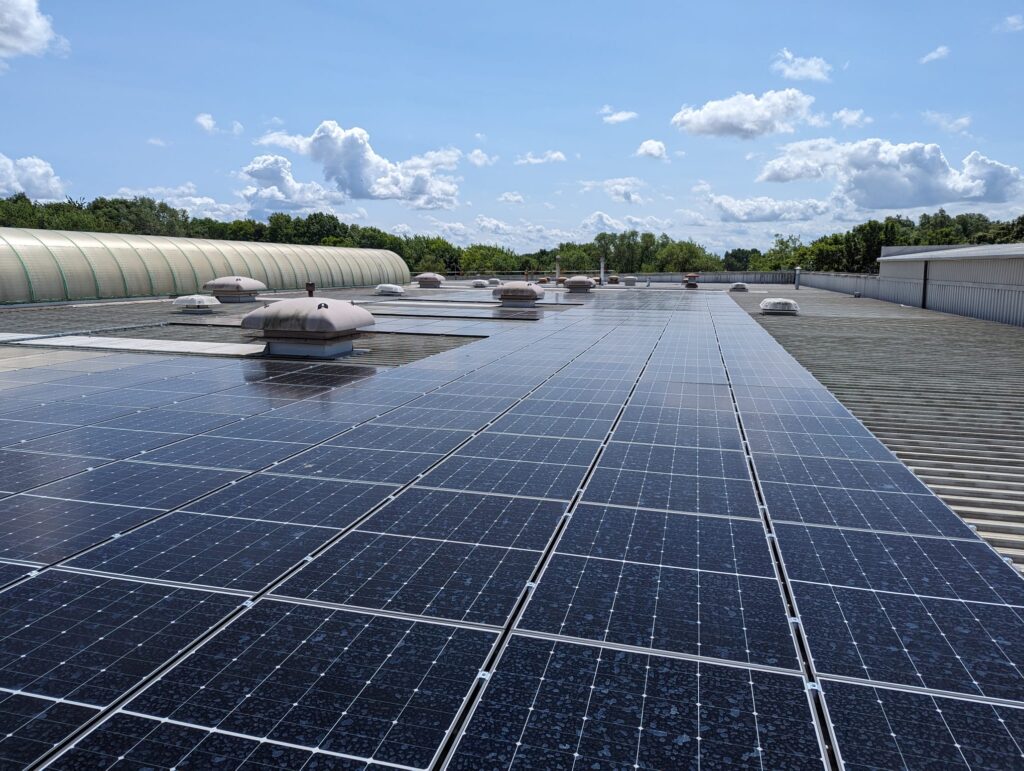
Rooftop Solar
Make use of available commercial and industrial roof space.
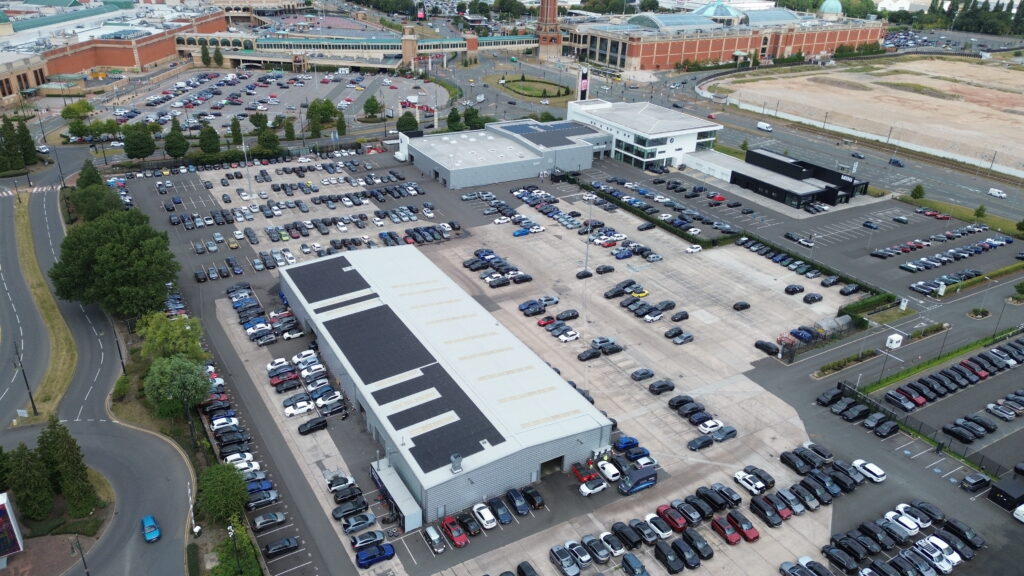
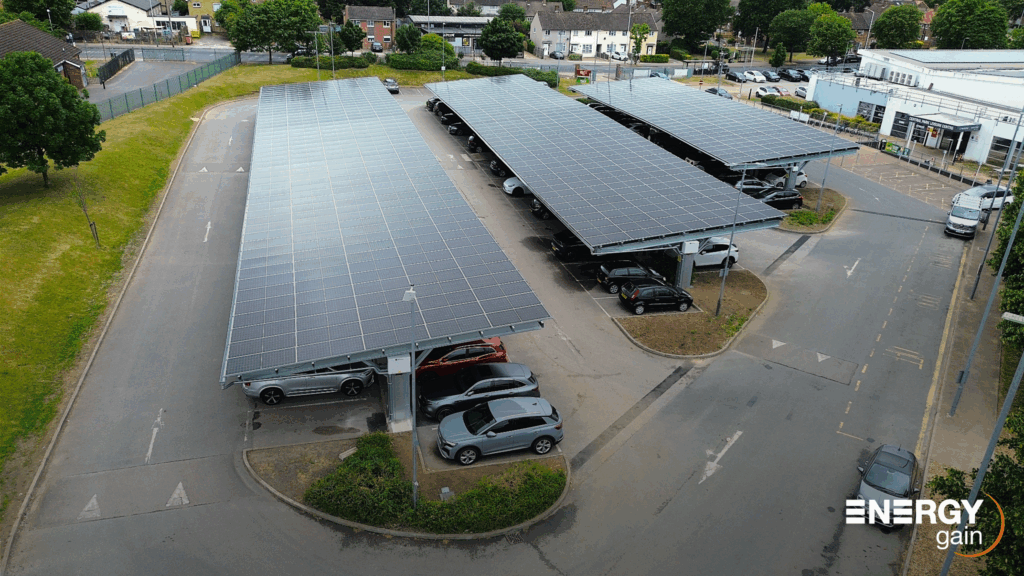
Solar Carports
Turn existing parking areas into solar generation space.
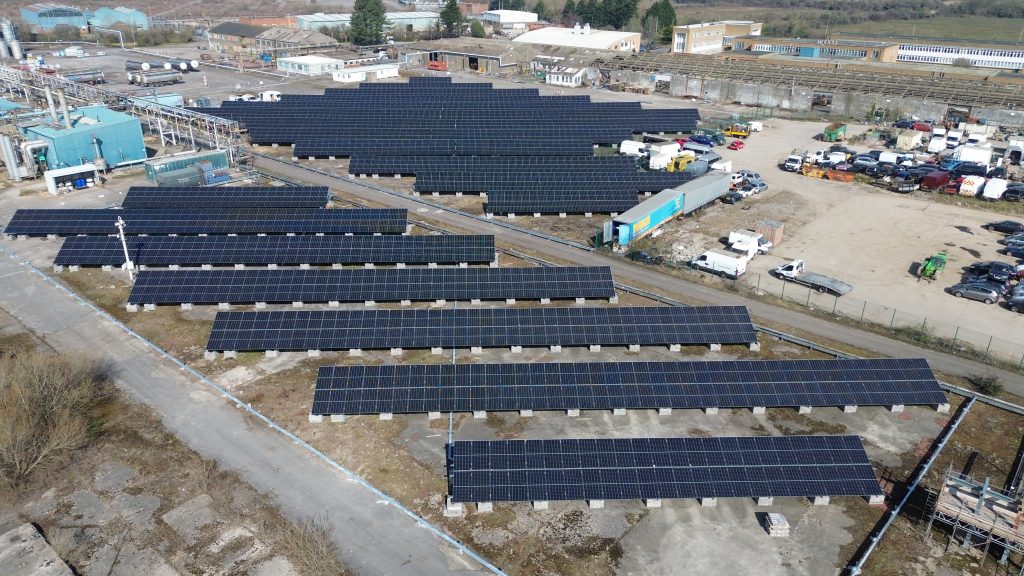
Ground-Mounted Solar
Utilise suitable land where additional generation is required.
EV Charging
Consider future charging demand alongside the site’s wider energy requirements.

Agricultural Solar Case Study: Camstar Herbs
Camstar Herbs is a grower and producer of herbs, spices and seeds, with extensive agricultural operations and a large crop-growing area.
Energy Gain UK installed a 260 kWp rooftop solar PV system at the company’s main operating warehouse at Chestnut’s Farm in Suffolk. The installation was designed to generate renewable electricity on-site and offset a proportion of the facility’s daytime electricity demand.
The system demonstrates how agricultural producers can make use of existing warehouse roof space to generate electricity while supporting operational efficiency and carbon reduction objectives.
Project statistics:
System size: 260 kWp
Annual generation: 243,100 kWh
Expected payback period: 4 years
Annual CO₂ savings: Approximately 57 tonnes
20-year CO₂ savings: 1,293 tonnes
The installation forms part of Camstar Herbs’ wider approach to reducing its environmental impact, alongside investment in more efficient agricultural machinery and transport vehicles.

Agricultural Supply Chains: Cargill
Cargill operates across agriculture, food production and supply chains, where energy can be required for processing, storage and other industrial operations.
Energy Gain UK’s experience includes a 199 kWp solar PV installation for Cargill, demonstrating how commercial solar can support businesses operating within the wider agricultural and food production sector.
For agricultural processors and businesses handling food and agricultural products, rooftop and ground-mounted solar can be assessed against electricity consumption, available space and operational requirements.
The appropriate system size should be based on the site’s electricity demand and the financial benefits of using the generated electricity on-site, rather than simply maximising the number of panels installed.

Agricultural Solar Case Study: Eastoft Grange Farm
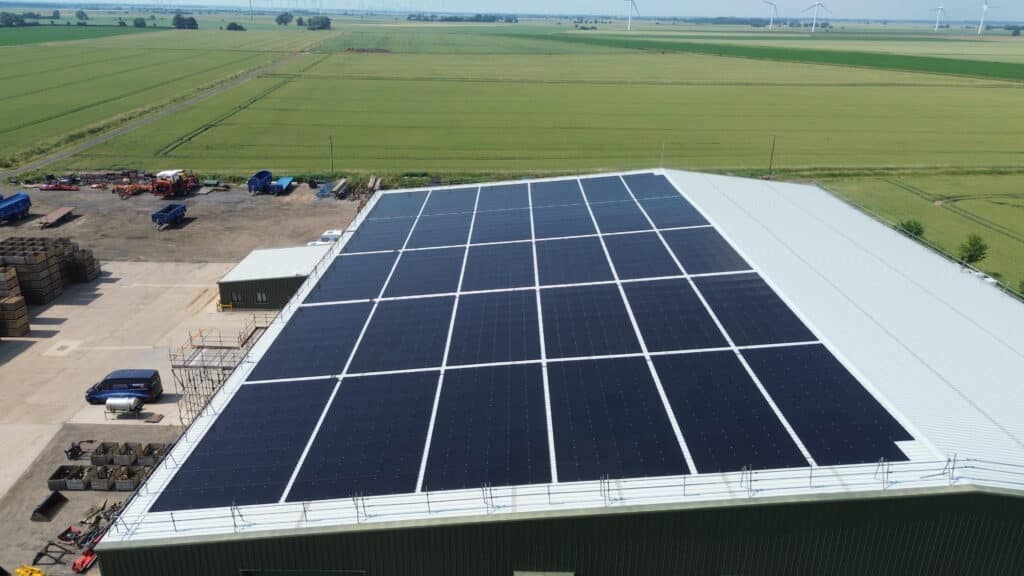
Energy Gain UK delivered a 711 kWp commercial solar PV installation at Eastoft Grange Farm, completed in two phases across two separate roofs.
The project demonstrates how agricultural businesses can make effective use of existing building space to generate renewable electricity on-site, helping reduce reliance on grid electricity and support long-term sustainability objectives.
For farms with significant electricity demand, rooftop solar can provide an opportunity to offset a proportion of the power used across agricultural operations, depending on consumption patterns and the timing of solar generation.
Project highlights:
Total system size: 711 kWp
Installation type: Rooftop solar PV
Delivery: Two phases across two separate roofs
Financial Modelling Should Reflect the Real Site
The financial assessment for an agricultural solar installation should use actual electricity consumption and site-specific information wherever possible.
Energy Gain’s modelling considers:
Historic electricity consumption and costs
Seasonal demand and operating patterns
Half-hourly electricity data
Forecast solar generation
System degradation
Maintenance assumptions
Future electricity prices
Self-consumption and export
Available funding options
This produces a cash-flow model that can help assess potential savings, payback and financial returns over the operational life of the system
What We Assess
Before recommending a solar system, Energy Gain considers the technical and operational requirements of the agricultural site, including:
Electricity consumption and seasonal operating patterns
Roof construction and structural capacity
Available roof space or land
Existing electrical infrastructure
Refrigeration, processing and agricultural equipment
Future electricity demand
DNO requirements and grid capacity
Planning, land-use and environmental constraints
This ensures the proposed system is designed around the specific requirements of the agricultural business rather than a standard system size.
The process begins with an assessment of your site’s energy use, available space and future requirements.
Energy Gain’s detailed desktop feasibility study can assess your electricity consumption, half-hourly usage data, roof or land availability, existing electrical infrastructure, grid requirements and potential future demand such as EV charging.
This helps establish whether solar is suitable for the site and identifies the most appropriate solution before progressing to detailed design.

Energy Gain develops a system designed around the site’s specific requirements.
The design considers factors including available roof space, structural requirements, solar generation, self-consumption, export and electrical infrastructure. Detailed financial modelling then assesses the expected investment, savings, payback and long-term returns.
Different system sizes and investment options can be modelled to identify the solution that provides the strongest technical and financial outcome for the business.

Energy Gain manages the delivery of the project from procurement through to construction and commissioning.
Our experienced installation teams work around the operational requirements of the site, with project planning focused on maintaining safety, minimising disruption and delivering the system to the agreed specification.
Once installation is complete, the system is commissioned and handed over with the relevant documentation and performance information
Solar performance doesn’t stop being important once the system is installed.
Energy Gain can monitor system performance to identify potential issues and ensure the installation continues to operate as expected. Performance data can be used to track generation and identify changes that may require investigation or maintenance.
Ongoing maintenance helps protect system performance and maximise the long-term value of the investment

Which Solar Solution Is Right for Your Agricultural Business?
The most suitable solution depends on the type of farming operation, electricity demand and available space.
Rooftop solar may be suitable for barns, livestock buildings, warehouses and processing facilities, subject to structural suitability and other site requirements. Ground-mounted solar may be worth considering where there is suitable land and a viable route to connect the system to the site’s electrical infrastructure.
The important thing is to assess the options together, considering technical feasibility, seasonal electricity demand and potential financial returns.
Solar for the Future of Agriculture
Agricultural businesses continue to adapt to changing operating costs, evolving production methods and increasing expectations around environmental performance.
New refrigeration equipment, processing facilities, electrification and business expansion can all affect future electricity requirements.
Assessing these changes alongside current consumption can help ensure that a solar installation is designed around the longer-term needs of the business.
Calculate Your Agricultural Solar Opportunity
Use our calculators to get an initial indication of the potential opportunity:
The calculators provide an initial indication. A detailed feasibility assessment can use your actual electricity consumption and site information to develop a more tailored financial assessment.
Explore Your Agricultural Solar Opportunity
Energy Gain UK offers a free, detailed desktop feasibility study to assess the potential for commercial solar at your farm or agricultural business.
We’ll consider your electricity consumption, seasonal operating patterns, roof or land availability, technical requirements and potential financial returns to establish the opportunity.