
Commercial Solar for Healthcare
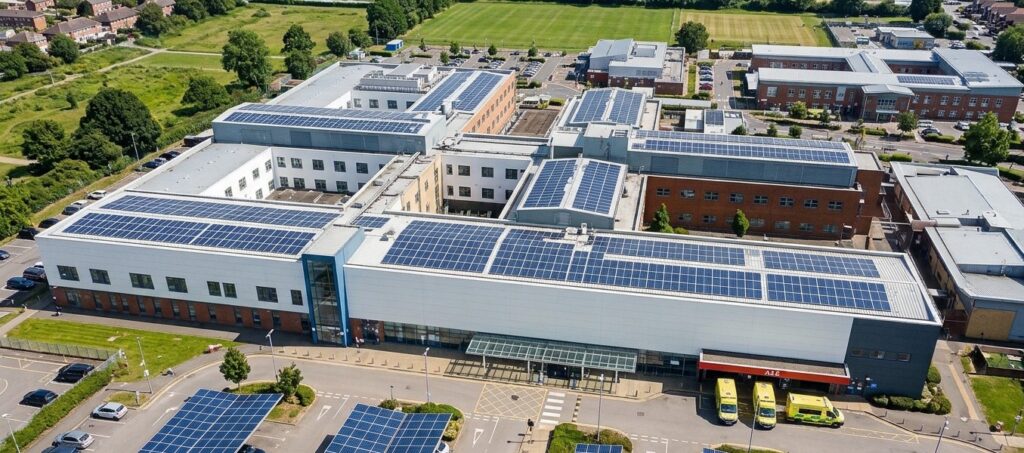
Solar can support the healthcare sector through rooftop solar, solar carports and ground-mounted systems, helping healthcare organisations generate renewable electricity on-site, manage electricity costs and reduce operational carbon emissions.

Reduce Energy Costs
Generate electricity on-site to reduce reliance on grid electricity and help manage long-term operating costs.
Support Healthcare Sustainability Goals
Generate renewable electricity on-site to support environmental commitments and wider decarbonisation objectives.

Plan for Future Energy Demand
Design your solar solution around the needs of your estate, including expanding facilities, electrification and future electricity demand.
Commercial Solar for Healthcare
Healthcare facilities, from hospitals and NHS estates to care homes, GP surgeries, laboratories and pharmaceutical sites, have varied energy requirements. Commercial solar solutions should be assessed around each site’s electricity consumption, infrastructure and available space.
Hospitals and larger healthcare estates often have significant electricity demand from lighting, ventilation, air conditioning, medical equipment, IT systems and other essential services. Their 24/7 operations can provide opportunities to use solar electricity directly on-site.
Smaller facilities have different consumption patterns, influenced by opening hours, heating and cooling, refrigeration and medical equipment.
Potential solutions include commercial rooftop solar, solar carports and ground-mounted solar, depending on roof condition, available land, electricity demand and operational requirements.
For healthcare organisations managing multiple buildings, assessing the wider estate can help identify sites with the strongest technical and financial potential for solar.
The Energy Challenge for Healthcare Organisations
Energy is an important operational consideration for healthcare organisations, particularly where buildings require continuous power to support patient care, clinical services and essential infrastructure.
At the same time, healthcare providers are under pressure to manage budgets, improve energy efficiency and reduce their environmental impact.
The NHS has committed to reaching net zero for emissions it directly controls by 2040 and for emissions it influences by 2045. Its Green Plan guidance identifies on-site and near-site renewable energy generation as an opportunity to reduce emissions and costs across healthcare estates.
For NHS trusts and other healthcare providers, commercial solar can form part of a wider approach to managing energy consumption and supporting sustainability objectives.
However, the opportunity varies between sites. A hospital with a large roof and substantial daytime electricity demand will have different requirements from a smaller medical centre or care home.
A detailed assessment should therefore consider how much electricity the facility uses, when it uses it and how much of the solar generation can be consumed on-site.
The Cost of Doing Nothing
The financial case for commercial solar should consider not only the potential investment return but also the ongoing cost of purchasing electricity from the grid.
Healthcare facilities require electricity to maintain their buildings, equipment and services. Where a suitable site can generate and use renewable electricity, solar may help reduce the amount that needs to be purchased from the grid.
Continuing to rely entirely on grid electricity means a healthcare organisation may miss opportunities to reduce its exposure to electricity costs and generate renewable electricity on-site.
There is also the wider sustainability consideration. NHS organisations have established decarbonisation commitments, and energy generation can form part of a broader estates strategy.
The important question is whether installing solar represents a technically suitable and financially worthwhile investment for the individual facility.
Energy Gain assesses the potential opportunity by comparing the proposed solar investment with the expected costs and benefits over the system’s operational life.
This can help decision-makers understand the potential financial implications of proceeding with solar, including the cost of continuing to purchase electricity without the proposed system.
Solar Solutions for Healthcare Sites
Rooftop Solar
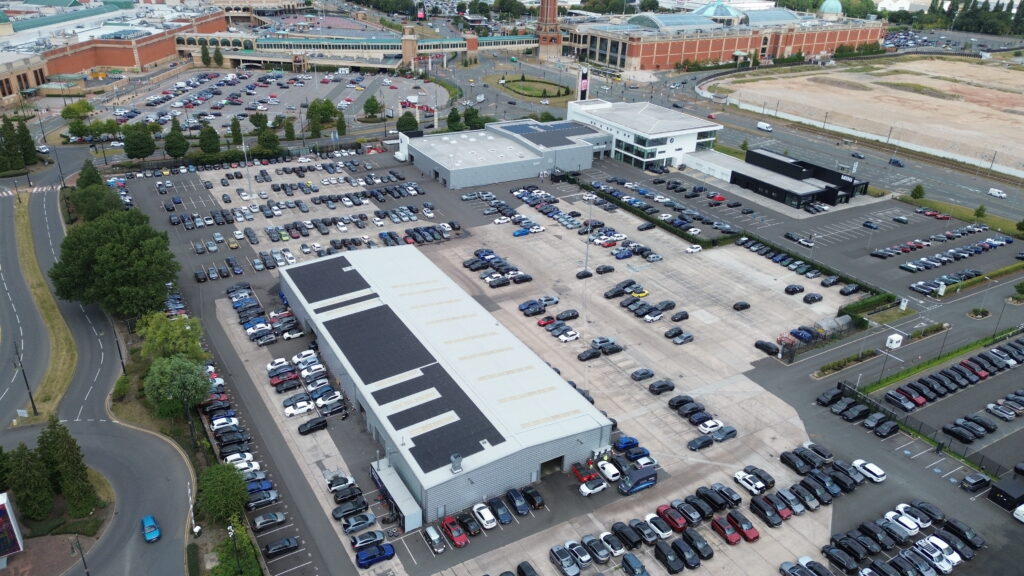
Make use of available commercial and industrial roof space.
Solar Carports
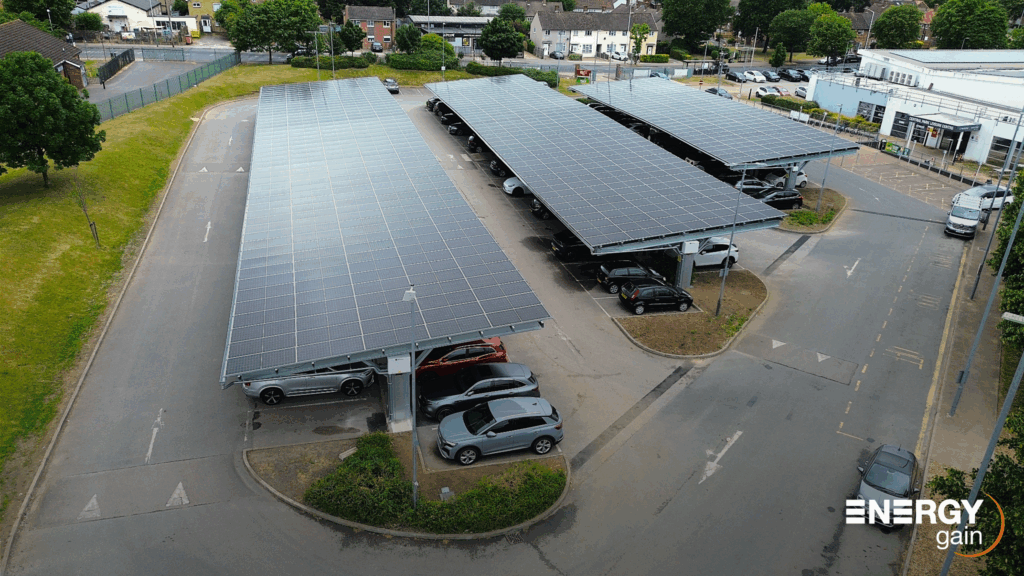
Turn existing parking areas into solar generation space.
Ground-Mounted Solar
Utilise suitable land where additional generation is required.
EV Charging
Consider future charging demand alongside the site’s wider energy requirements.

Solar for Hospitals and Large Healthcare Estates
Hospitals and larger healthcare estates may offer opportunities for substantial solar installations, particularly where there are extensive roof areas, suitable adjacent land or large parking facilities.
Rooftop solar can make use of existing building space, while solar carports may provide an alternative where suitable parking areas are available. Ground-mounted solar may also be worth assessing where land, planning and electrical infrastructure allow.
For larger estates, the assessment needs to go beyond the available installation area.
Key considerations include:
Electricity consumption across individual buildings and the wider estate.
Half-hourly electricity demand and the timing of solar generation.
Roof condition, structural capacity and planned refurbishment works.
Available land and parking areas.
Existing electrical infrastructure and grid connection constraints.
Essential services and requirements for safe construction.
Future plans for building expansion and electrification.
The potential for self-consumption and electricity export.
Where several buildings or locations are involved, the financial assessment should establish how the proposed system would interact with the relevant electrical infrastructure and electricity supply arrangements.
The aim is to identify a solution that makes effective use of available space while reflecting the operational and financial requirements of the healthcare organisation.
Solar for Private Healthcare, Care Homes and Medical Centres
Smaller healthcare facilities can also benefit from a properly assessed commercial solar installation.
Private hospitals, care homes, GP surgeries and medical centres may have suitable roof space and electricity demand that can support on-site generation.
However, the financial opportunity will depend on the characteristics of the building and how it operates.
For example, a care home may have electricity demand associated with lighting, catering, laundry, refrigeration, ventilation and resident facilities throughout the day. A medical centre may experience more concentrated demand during opening hours, while a private hospital may have a more continuous operating profile.
These differences influence how much solar electricity can be used directly and how the system should be sized.
Rather than specifying a standard system based on roof area alone, Energy Gain assesses electricity consumption alongside the available installation space to establish a suitable system size and potential financial return.
Vygon UK – Supporting Healthcare with Commercial Solar
System size: 503 kWp
Annual generation: Approximately 469,500 kWh
Annual CO₂ savings: Up to 131 tonnes
Location: Swindon, Wiltshire
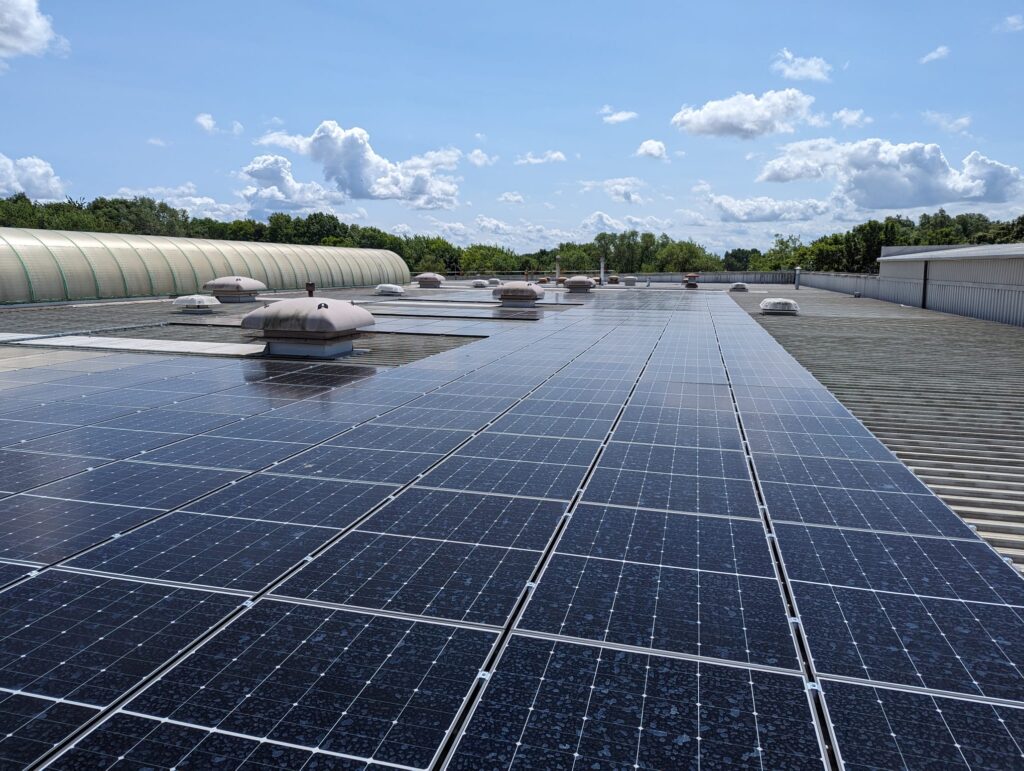
Vygon UK, a supplier of medical and surgical devices to the NHS and private healthcare sector, partnered with Energy Gain UK to reduce electricity costs and operational carbon emissions at its Swindon headquarters.
The Solution
Energy Gain UK delivered a 503 kWp rooftop solar PV installation, designed to generate renewable electricity on-site while allowing Vygon’s warehouse, logistics and office operations to continue throughout the installation.
The Results
The system generates approximately 469,500 kWh of electricity annually, helping Vygon reduce its reliance on grid electricity and support its wider sustainability objectives.

Our Commercial Solar Panel Projects
Financial Modelling Should Reflect the Real Site
Healthcare organisations need a clear understanding of the financial implications before committing to a commercial solar investment.
Energy Gain’s detailed feasibility assessments consider the available electricity data and site information to build a financial model based on the proposed installation.
This can include:
Historic electricity consumption and costs.
Half-hourly electricity demand, where available.
Estimated solar generation.
The proportion of electricity expected to be used on-site.
Electricity export assumptions.
System degradation and maintenance costs.
Future electricity price assumptions.
Capital purchase, financing or power purchase agreement (PPA) options, where appropriate.
Long-term cash flow and projected return on investment.
The resulting assessment helps decision-makers compare the potential costs and benefits over the expected operational life of the system.
For estates directors, finance teams and senior decision-makers, the key question is:
What financial return could commercial solar deliver for our healthcare facility, and how does the proposed investment fit our wider estates and sustainability plans?
What We Assess
Before recommending a solar installation, Energy Gain considers the technical and operational requirements of the site, including:
Electricity consumption and operating patterns.
Roof construction, condition and structural capacity.
Available roof space, land and parking areas.
Existing electrical infrastructure.
Essential services and operational constraints.
Future building developments and electricity demand.
Distribution Network Operator (DNO) requirements and grid capacity.
Planning requirements and site-specific constraints.
Potential self-consumption, export and financial returns.
This ensures the proposed system is based on the requirements of the facility rather than a standard system size.
The process begins with an assessment of your site’s energy use, available space and future requirements.
Energy Gain’s detailed desktop feasibility study can assess your electricity consumption, half-hourly usage data, roof or land availability, existing electrical infrastructure, grid requirements and potential future demand such as EV charging.
This helps establish whether solar is suitable for the site and identifies the most appropriate solution before progressing to detailed design.

Energy Gain develops a system designed around the site’s specific requirements.
The design considers factors including available roof space, structural requirements, solar generation, self-consumption, export and electrical infrastructure. Detailed financial modelling then assesses the expected investment, savings, payback and long-term returns.
Different system sizes and investment options can be modelled to identify the solution that provides the strongest technical and financial outcome for the business.

Energy Gain manages the delivery of the project from procurement through to construction and commissioning.
Our experienced installation teams work around the operational requirements of the site, with project planning focused on maintaining safety, minimising disruption and delivering the system to the agreed specification.
Once installation is complete, the system is commissioned and handed over with the relevant documentation and performance information

Solar performance doesn’t stop being important once the system is installed.
Energy Gain can monitor system performance to identify potential issues and ensure the installation continues to operate as expected. Performance data can be used to track generation and identify changes that may require investigation or maintenance.
Ongoing maintenance helps protect system performance and maximise the long-term value of the investment

Which Solar Solution Is Right for Your Healthcare Facility?
The right solution will depend on the building, available space, electricity consumption and wider estate requirements.
Rooftop solar: May be suitable for hospitals, medical centres, care homes and other healthcare buildings with appropriate roof space and structural capacity.
Solar carports: Can combine renewable electricity generation with covered parking, potentially making use of existing parking areas without requiring additional roof space on the main building.
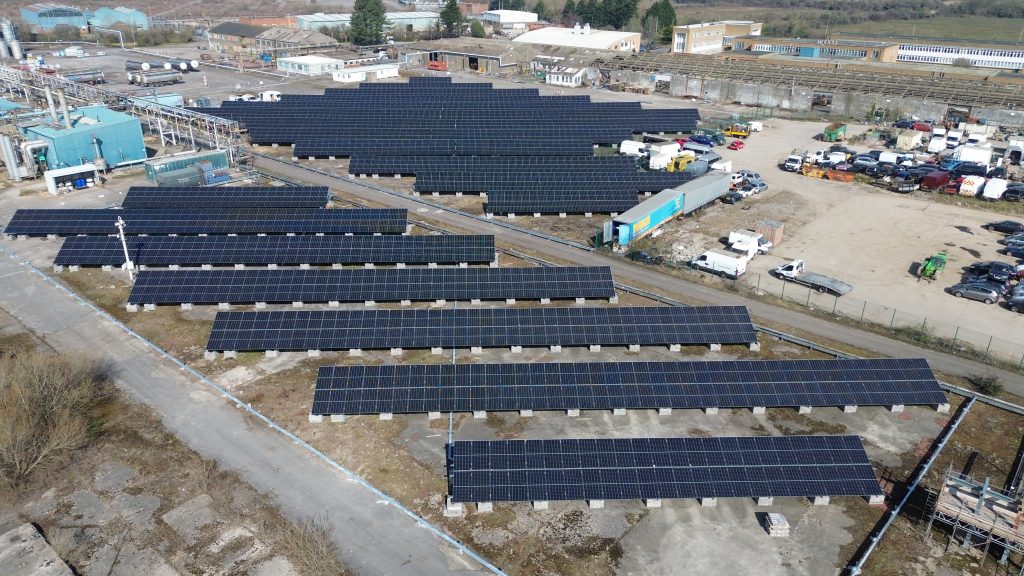
Ground-mounted solar: May be an option for healthcare estates with suitable land and an appropriate route for connecting the installation to the site’s electrical infrastructure.
Each option requires a technical and financial assessment to establish its suitability. Energy Gain can assess the available options and identify the approach that best fits the site’s requirements.
Solar for the Future of Healthcare
Healthcare estates will continue to evolve as organisations invest in buildings, equipment, energy efficiency and lower-carbon technologies.
Future changes may include building extensions, additional clinical facilities, electrification of heating and transport, and changes to how healthcare services are delivered.
These developments can affect electricity demand and the suitability of a solar installation over time.
Considering future requirements alongside current consumption can help ensure the proposed system is appropriately sized and aligned with the organisation’s longer-term plans.
For organisations managing multiple healthcare sites, a phased approach may also help prioritise the locations with the strongest initial opportunities
Calculate Your Healthcare Solar Opportunity
Use our calculators to get an initial indication of the potential financial opportunity:
These calculators provide an initial indication of the opportunity. A detailed feasibility assessment can use your actual electricity consumption, site information and investment requirements to develop a more tailored financial model.
Explore Your Healthcare Solar Opportunity
Energy Gain can undertake a free, detailed desktop feasibility study to assess the potential for commercial solar across your healthcare facility or estate.
We will consider your electricity consumption, available roof or land, operational requirements, future energy demand and potential solar solutions to establish the technical and financial opportunity.
Whether you manage a hospital, healthcare estate, care home, medical centre or private healthcare facility, our team can help you understand whether commercial solar is a suitable investment.