
Commercial Solar for Education
Solar can help schools, colleges and universities generate renewable electricity on-site, manage operating costs and support their sustainability objectives.

Reduce Energy Costs
Generate electricity on-site to help reduce reliance on grid electricity and manage long-term energy expenditure.

Support Sustainability Goals
Reduce operational carbon emissions and support your organisation’s wider environmental commitments.

Make Better Use of Your Estate
Explore rooftop solar, solar carports and ground-mounted systems to make productive use of suitable buildings, parking areas and available land.

Commercial Solar for Education
Educational estates have varied energy requirements, from classrooms, offices and IT facilities to laboratories, workshops, sports facilities, kitchens and student accommodation. Electricity demand can also differ significantly between primary schools, further education colleges and university campuses.
For many institutions, solar provides an opportunity to generate electricity directly at the point of use. However, the most suitable solution depends on the site’s electricity consumption, available roof space, building condition and operating patterns.
Energy Gain UK assesses these factors to develop commercial solar solutions around the requirements of each educational estate, rather than recommending a standard system size.
The Energy Challenge for Educational Institutions
Schools, colleges and universities must balance operational budgets with the need to maintain comfortable, safe and effective learning environments.
Electricity is required for lighting, computers, heating and ventilation systems, catering equipment, workshops and specialist facilities. Larger campuses may also have substantial demand from laboratories, sports centres, libraries and accommodation.
At the same time, education providers may have long-term carbon-reduction commitments and wider sustainability objectives to consider.
Commercial solar can help address these challenges by generating renewable electricity on-site. The financial case should reflect actual electricity consumption, when buildings are occupied and how much of the solar generation can be used directly.
The Cost of Doing Nothing
Continuing to purchase electricity from the grid means an educational institution may miss opportunities to generate some of its electricity on-site.
Without assessing the potential for solar, suitable roof space or land may remain unused, while energy expenditure continues to place pressure on operating budgets.
A feasibility study can compare the cost of continuing to purchase electricity with the potential investment, savings and long-term financial returns from a solar installation. Any assessment should account for school holidays, seasonal demand, future building plans and the proportion of generation likely to be used on-site.
Solar Solutions for Educational Sites
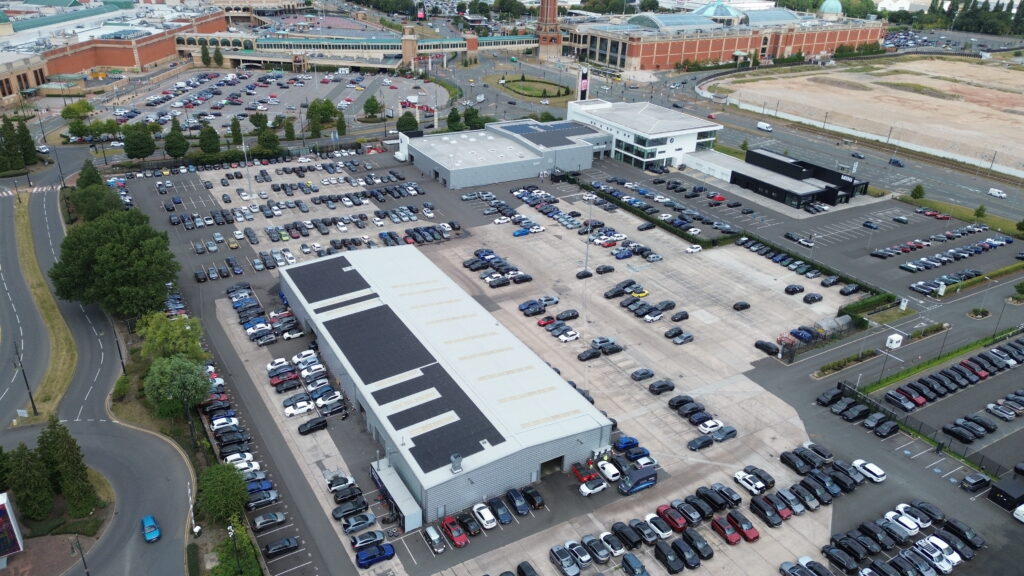
Rooftop Solar
Make use of available commercial and industrial roof space.
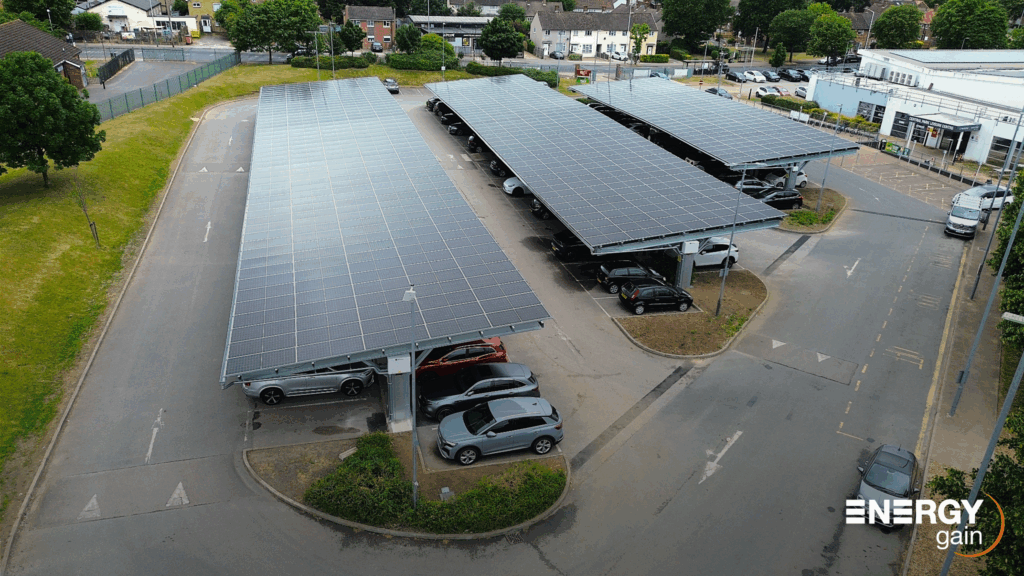
Solar Carports
Turn existing parking areas into solar generation space.
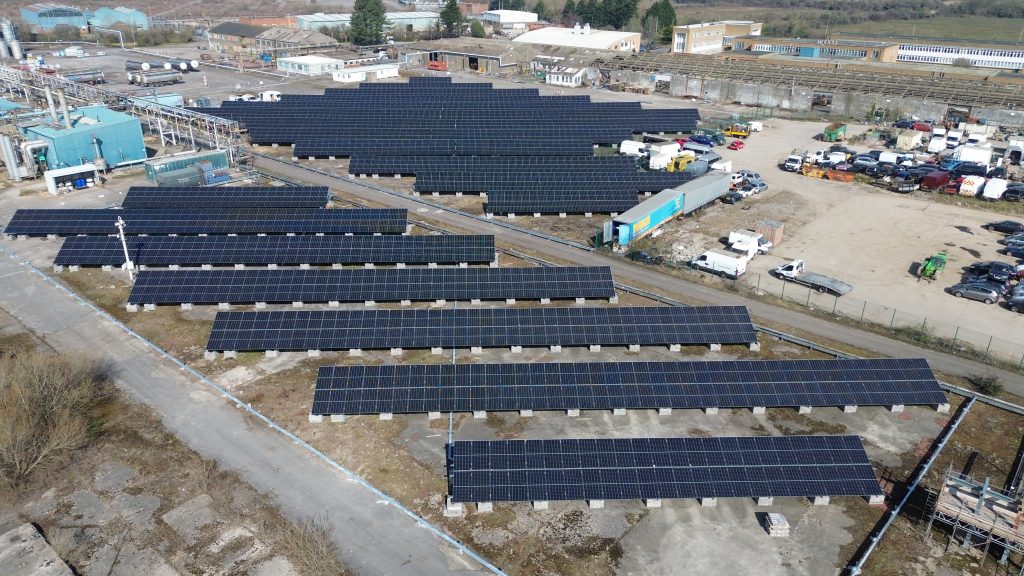
Ground-Mounted Solar
Utilise suitable land where additional generation is required.
solar calculators
Use our solar calculators to estimate potential savings

Solar for Schools, Colleges and Universities
Different educational settings present different opportunities for solar:
Schools and academies: Assess suitable classroom, sports hall and administrative building roofs.
Further education colleges: Consider teaching buildings, workshops, engineering facilities and larger campus roofs.
Universities: Evaluate opportunities across multiple buildings, laboratories, libraries and wider estates.
Multi-site education trusts: Assess individual sites alongside wider portfolio requirements to help prioritise investment.
Boarding schools and residential campuses: Consider electricity demand across teaching, accommodation, catering and leisure facilities.
Each site requires an individual assessment of electricity consumption, structural suitability, electrical infrastructure and potential future demand.
Education Solar Case Study: Blackburn College
Energy Gain UK delivered a 100 kWp solar PV installation for Blackburn College alongside air-source and ground-source heat pump technologies.
The project demonstrates how renewable electricity generation can form part of a wider approach to improving energy performance within an educational setting.
Project highlights
Client: Blackburn College
Solar PV capacity: 100 kWp
Reported annual generation: 85,000 kWh
Additional technologies: Air-source and ground-source heat pumps
The project illustrates the potential to integrate solar into a broader energy strategy, helping educational institutions assess opportunities to reduce grid electricity use and improve the environmental performance of their buildings.
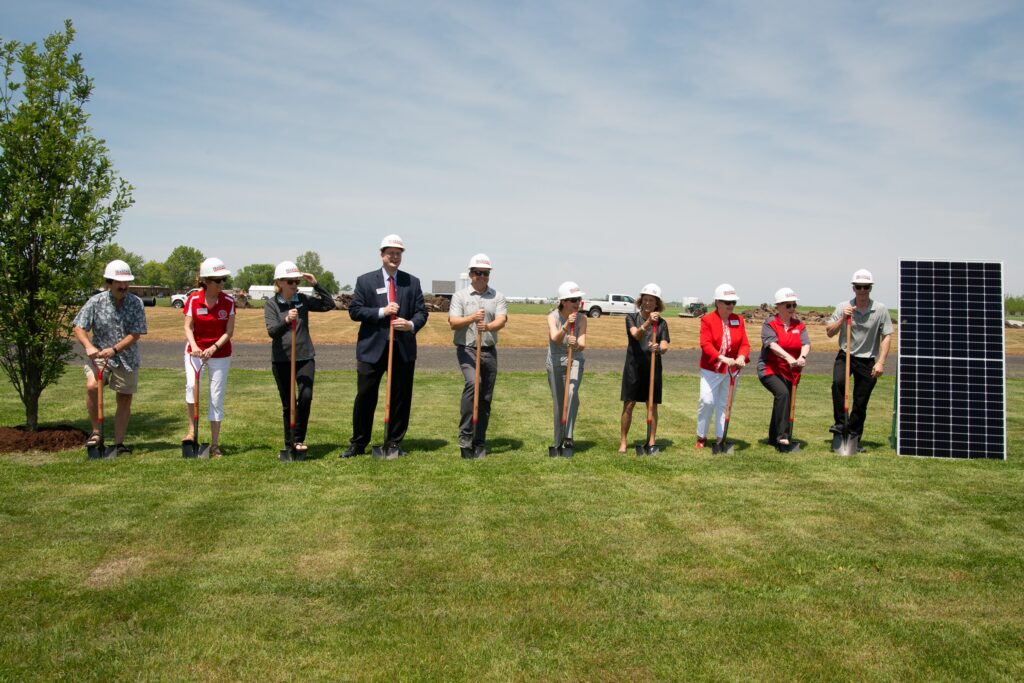
Solar for Schools: Millfield School
Energy Gain UK also completed a 100 kWp solar PV installation for Millfield School. The school had already introduced energy-efficiency measures, including LED lighting, as part of its approach to reducing electricity consumption.
The installation demonstrates how solar can complement other energy-saving measures within an educational estate.
Project highlights
Client: Millfield School
Solar PV capacity: 100 kWp
Reported annual generation: 83,000 kWh
Financial Modelling Should Reflect the Real Site
A credible solar investment assessment should be based on the institution’s actual electricity consumption and operational requirements.
Energy Gain UK can assess:
Historic and half-hourly electricity consumption.
Current electricity costs and tariff structure.
Available roof space, land and structural suitability.
Expected solar generation and on-site electricity use.
Potential electricity savings and export income.
System degradation, maintenance and long-term costs.
Future campus development and electricity demand.
Available financing options.
This helps decision-makers compare potential system sizes and understand the expected investment, savings, payback period and long-term financial returns.
What We Assess
Before recommending a solar solution, Energy Gain UK considers the technical and operational requirements of the site, including:
Electricity consumption and building-use patterns.
Roof condition, construction and structural capacity.
Available roof space, parking areas and suitable land.
Existing electrical infrastructure and grid connection requirements.
Planning considerations and site constraints.
Installation access, safety and the need to maintain normal operations.
Future building projects and changes in electricity demand.
Our approach is designed to establish whether solar is technically suitable and financially worthwhile before progressing to detailed design.
The process begins with an assessment of your site’s energy use, available space and future requirements.
Energy Gain’s detailed desktop feasibility study can assess your electricity consumption, half-hourly usage data, roof or land availability, existing electrical infrastructure, grid requirements and potential future demand such as EV charging.
This helps establish whether solar is suitable for the site and identifies the most appropriate solution before progressing to detailed design.

Energy Gain develops a system designed around the site’s specific requirements.
The design considers factors including available roof space, structural requirements, solar generation, self-consumption, export and electrical infrastructure. Detailed financial modelling then assesses the expected investment, savings, payback and long-term returns.
Different system sizes and investment options can be modelled to identify the solution that provides the strongest technical and financial outcome for the business.

Energy Gain manages the delivery of the project from procurement through to construction and commissioning.
Our experienced installation teams work around the operational requirements of the site, with project planning focused on maintaining safety, minimising disruption and delivering the system to the agreed specification.
Once installation is complete, the system is commissioned and handed over with the relevant documentation and performance information

Solar performance doesn’t stop being important once the system is installed.
Energy Gain can monitor system performance to identify potential issues and ensure the installation continues to operate as expected. Performance data can be used to track generation and identify changes that may require investigation or maintenance.
Ongoing maintenance helps protect system performance and maximise the long-term value of the investment

Which Solar Solution Is Right for Your Educational Estate?
The most suitable solution depends on the buildings, available land, electricity demand and investment objectives.
| Site requirement | Potential solution |
|---|---|
| Suitable roofs on teaching or administrative buildings | Rooftop solar |
| Large sports halls or campus buildings | Rooftop solar, subject to structural assessment |
| Suitable staff or visitor parking areas | Solar carports |
| Available land and significant electricity demand | Ground-mounted solar |
| Multiple schools or campus buildings | Site-by-site or estate-wide feasibility assessment |
Solar for the Future of Education
Educational estates may change as buildings are refurbished, facilities expand and electricity demand evolves. Planning solar alongside wider estate improvements can help institutions consider roof upgrades, electrical infrastructure and future energy requirements together.
Assessing these factors early can help avoid designing a solar system around short-term needs alone.
Calculate Your Solar Opportunity
Use our calculators to explore the potential financial case for commercial solar:
These tools provide an initial indication. A detailed feasibility study can use your institution’s actual electricity consumption and site information to develop a more informed assessment.
Explore Your Educational Estate’s Solar Potential
Energy Gain UK offers a free, detailed desktop feasibility study to assess the potential for commercial solar at your school, college or university.
We’ll consider your electricity consumption, available roof space or land, site requirements and potential solar solutions to help establish the technical and financial opportunity.