
cOMMERCIAL SOLAR FOR FOOD & BEVERAGE SECTOR
Commercial solar solutions for food and beverage manufacturers across the UK, helping reduce electricity costs, lower carbon emissions and support more sustainable production.
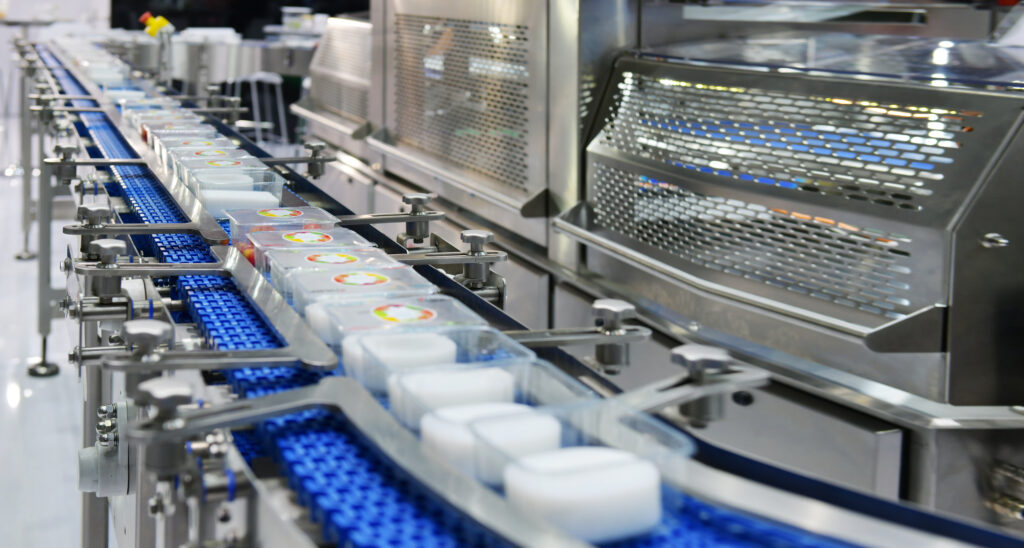
LOWER ENERGY COSTS
Generate electricity on-site and reduce reliance on grid electricity.

Reduce your carbon footprint
Generate renewable electricity and reduce operational carbon emissions.

Greater energy security
Design your solar solution around future requirements, including EV charging and increasing electricity demand.
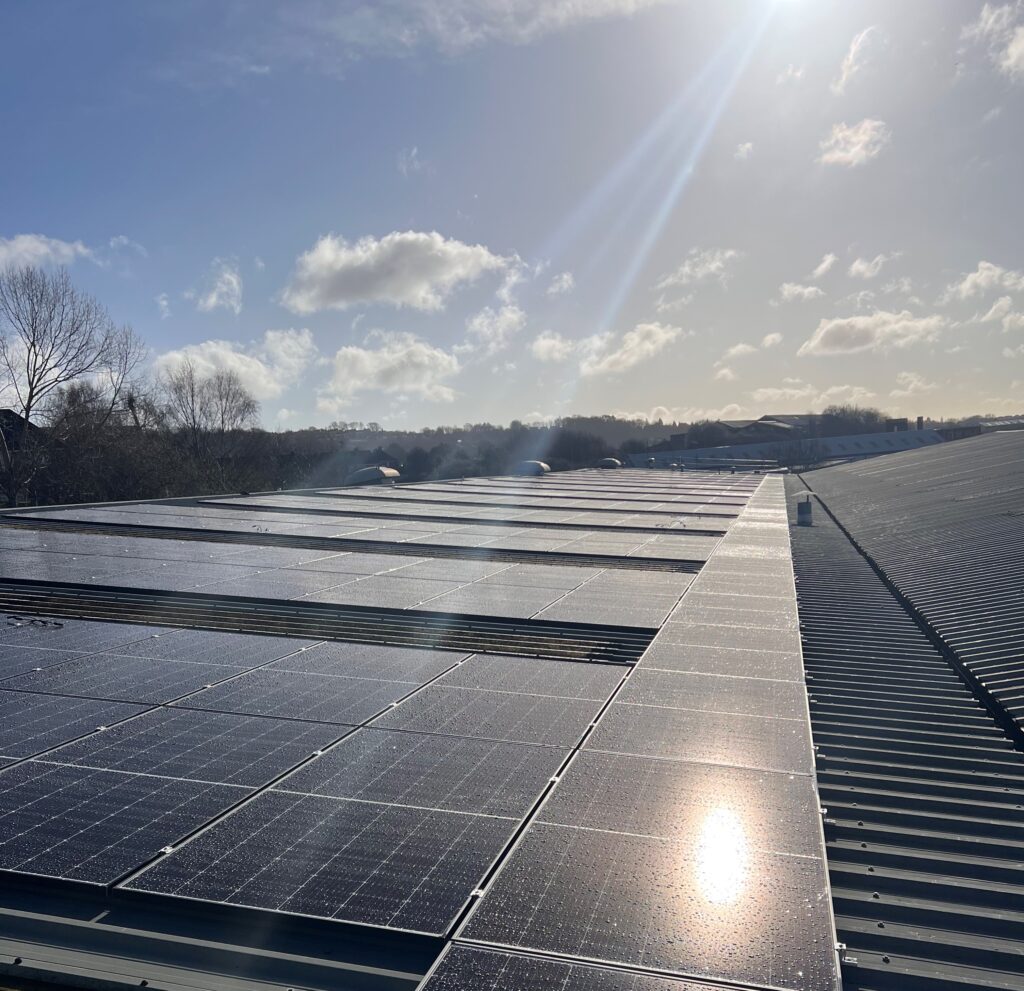
Commercial Solar for Food & Beverage Manufacturing
For food and beverage manufacturers, electricity is closely tied to production. Refrigeration, cold storage, processing equipment, extraction, compressed air, pumping, packaging and production machinery can all create substantial electrical loads. In many facilities, these loads continue throughout much of the working day, making the relationship between electricity consumption and solar generation particularly important.
For a business considering commercial solar for food manufacturing, the starting point should therefore be the energy profile rather than the available roof area. Understanding how much electricity the site uses, when it is used and how that demand may change as the business grows gives a much clearer indication of whether solar panels for food factories could provide a worthwhile investment.
There is also a wider commercial consideration. Food and beverage manufacturers increasingly need to demonstrate progress on carbon reduction and ESG to customers and supply-chain partners. On-site renewable generation will not address every aspect of a company’s environmental impact, but where the site is suitable, commercial solar for food and beverage manufacturing can form part of a practical energy strategy.
The Energy Challenge for Food & Beverage Manufacturing
Electricity demand varies considerably between food and beverage businesses.
A chilled or frozen food manufacturer may have significant refrigeration loads operating for extended periods. A processing facility may have high-demand machinery, pumps and compressed air. Packaging and distribution operations can add further electrical consumption.
This makes it important to understand the site’s half-hourly electricity consumption before deciding how much solar to install.
A business with strong daytime demand may be able to consume a substantial proportion of its solar generation directly. Another facility may have considerable demand outside daylight hours, making battery storage or a different system configuration worth investigating.
The point is that there is no standard solar system for the food manufacturing sector.
The system needs to reflect how the particular facility operates.
The Cost of Doing Nothing
The financial decision should also consider what happens if the business continues purchasing all of its electricity from the grid.
Electricity costs remain an ongoing operating expense. If a proportion of that electricity could instead be generated on-site, the business has an opportunity to replace part of that expenditure with investment in an asset capable of generating electricity for many years.
There is also the wider supply-chain consideration. Food and beverage businesses supplying major retailers, manufacturers and other organisations may increasingly be asked to demonstrate carbon reduction and ESG performance. A credible approach to renewable energy can therefore support wider sustainability objectives alongside the financial case.
Our Do Nothing Calculator can help illustrate what future electricity expenditure could look like if the business continues to purchase the equivalent electricity requirement from the grid.
Solar Solutions for Food and beverage manufacturers
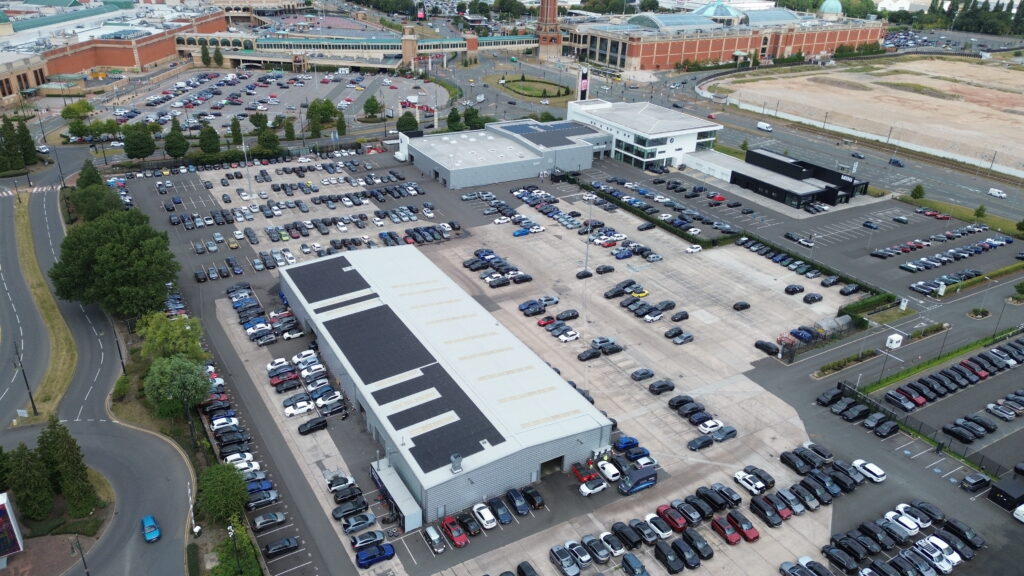
Rooftop Solar
Make use of available commercial and industrial roof space.
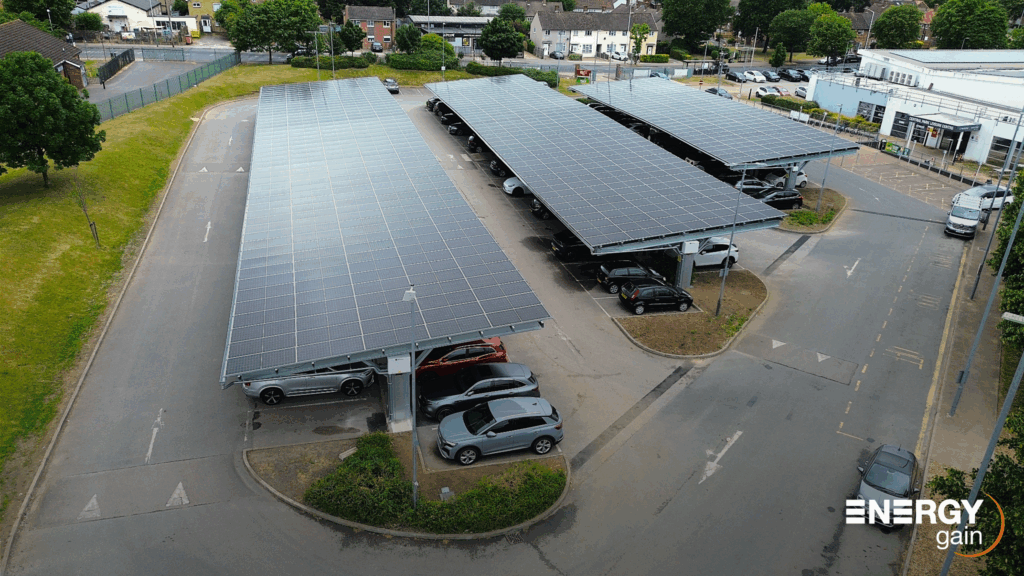
Solar Carports
Turn existing parking areas into solar generation space.
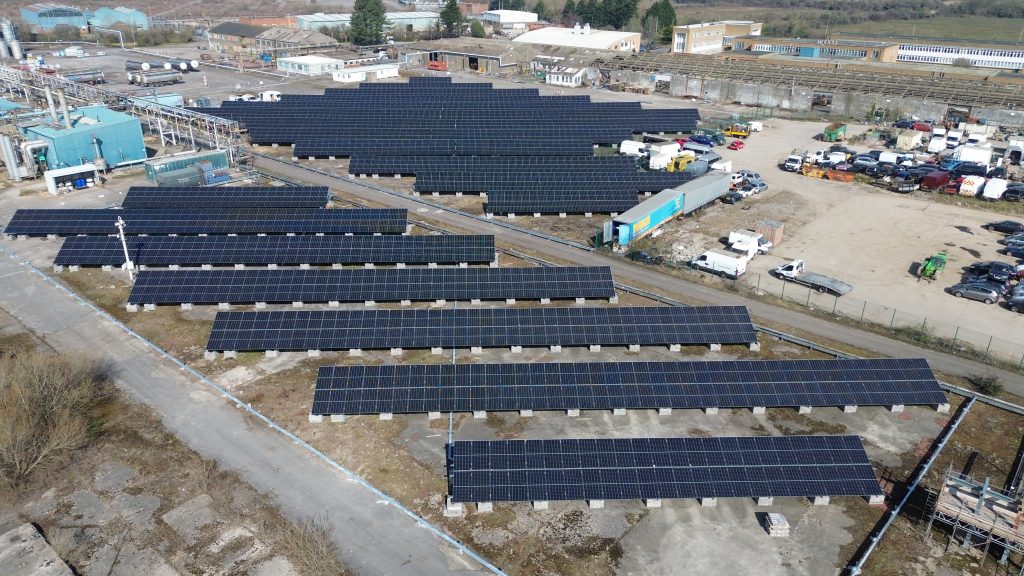
Ground-Mounted Solar
Utilise suitable land where additional generation is required.
solar calculators
Use our solar calculators to estimate potential savings

Solar case study:
Food manufacturing solar case study: Cargill PLC
Cargill PLC, a global food and agriculture business, worked with Energy Gain to implement commercial solar at its Wolverhampton site.
Energy Gain delivered a 199 kWp solar PV installation featuring 343 solar panels, providing on-site renewable electricity generation.
The system is expected to generate 184 MWh of electricity annually, with projected lifetime generation of 4,330 MWh.
The installation is also expected to deliver annual CO₂ savings of 39 tonnes, equivalent to 909 tonnes over its projected lifetime. The project demonstrates how commercial solar can help food-sector businesses generate renewable electricity on-site and support their longer-term carbon reduction objectives.

Food manufacturing: Olympic oils
Olympic Oils is a leading independent supplier of edible vegetable oils, sauces and other food products. Its automated production and packaging processes create significant electricity demand.
In 2019, Olympic Oils approached Energy Gain to reduce energy-related overheads and its carbon footprint.
Following a comprehensive site analysis, Energy Gain designed a 200 kWp solar PV system tailored to the business’s electricity demand and financial requirements.
The system is expected to generate 158,000 kWh of electricity annually, helping reduce reliance on grid electricity and manage production costs.
The installation is also projected to deliver 840 tonnes of carbon savings over 20 years. Olympic Oils demonstrates how commercial solar can help food manufacturers reduce electricity costs and support their longer-term sustainability objectives.
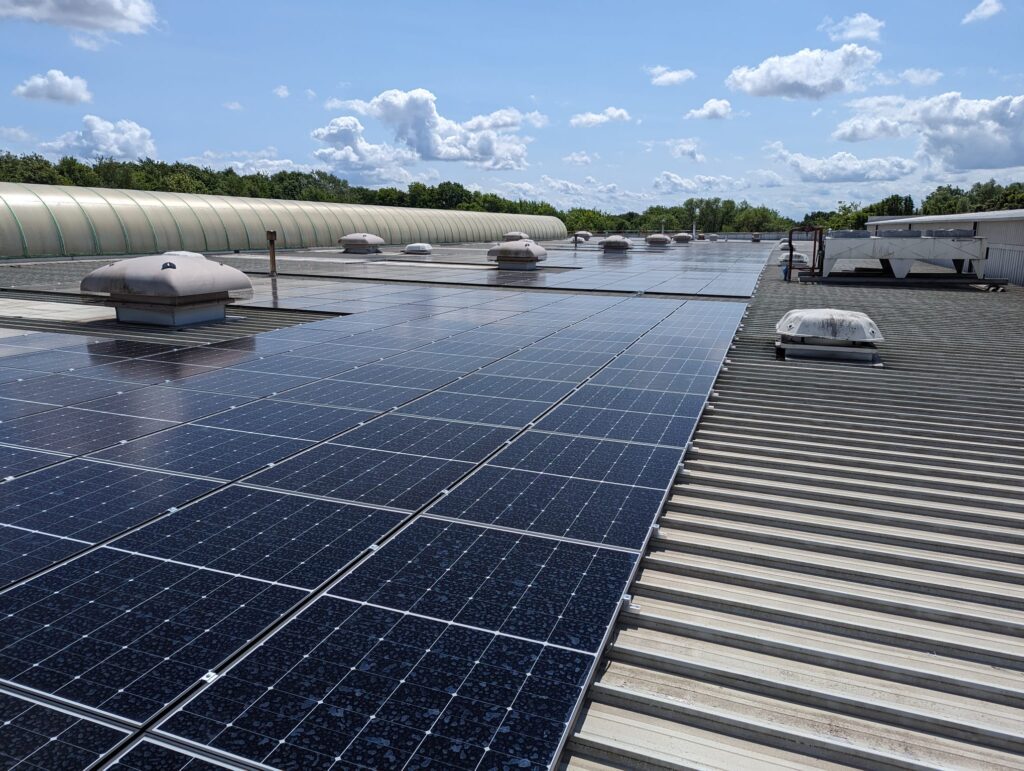
Broadland Drinks – Solar Installation and Project Delivery
Broadland Drinks is another Energy Gain UK client within the beverage sector.
For beverage manufacturers, managing installation work around existing operations is an important consideration. Project planning should account for site access, production requirements, health and safety procedures and the need to minimise disruption.
Financial Modelling Should Reflect Your Production Profile
The value of a solar installation depends on how much electricity it generates and how much of that electricity the business can use.
For example, a facility with substantial daytime production demand may be able to use a significant proportion of its solar generation directly. A site with different operating hours or seasonal production patterns may require a different system design.
Energy Gain UK’s detailed desktop feasibility study can assess electricity consumption, potential system capacity, expected generation, installation costs, potential savings and projected financial returns over a 25-year period.
This provides a more informed basis for comparing options and determining whether a project should progress to detailed design.
What We Assess
Before recommending a solar system, Energy Gain considers the technical requirements of the site, including:
- Electricity consumption and operating patterns
- Roof construction and structural capacity
- Available roof or land
- Existing electrical infrastructure
- EV charging requirements
- Future electricity demand
- DNO and grid capacity
- Planning and site constraints
This ensures the proposed system is based on the requirements of the business rather than a standard system size.
The process begins with an assessment of your site’s energy use, available space and future requirements.
Energy Gain’s detailed desktop feasibility study can assess your electricity consumption, half-hourly usage data, roof or land availability, existing electrical infrastructure, grid requirements and potential future demand such as EV charging.
This helps establish whether solar is suitable for the site and identifies the most appropriate solution before progressing to detailed design.

Energy Gain develops a system designed around the site’s specific requirements.
The design considers factors including available roof space, structural requirements, solar generation, self-consumption, export and electrical infrastructure. Detailed financial modelling then assesses the expected investment, savings, payback and long-term returns.
Different system sizes and investment options can be modelled to identify the solution that provides the strongest technical and financial outcome for the business.

Energy Gain manages the delivery of the project from procurement through to construction and commissioning.
Our experienced installation teams work around the operational requirements of the site, with project planning focused on maintaining safety, minimising disruption and delivering the system to the agreed specification.
Once installation is complete, the system is commissioned and handed over with the relevant documentation and performance information

Solar performance doesn’t stop being important once the system is installed.
Energy Gain can monitor system performance to identify potential issues and ensure the installation continues to operate as expected. Performance data can be used to track generation and identify changes that may require investigation or maintenance.
Ongoing maintenance helps protect system performance and maximise the long-term value of the investment

Solar for the Future of Food & Beverage Manufacturing
The energy requirements of automotive sites are changing.
Dealerships may be introducing additional EV chargers, while manufacturers and component suppliers may be electrifying production processes or increasing on-site electricity demand.
Considering these future requirements alongside today’s electricity consumption can help ensure the solar system remains appropriate as the business develops.
Calculate Your Automotive Solar Opportunity
Use our calculators to get an initial indication of the potential opportunity:
The calculators provide an initial indication. A detailed feasibility assessment can use your actual electricity consumption and site information.
Explore Your Automotive Solar Opportunity
Energy Gain can undertake a free, detailed desktop feasibility study to assess the potential for commercial solar at your automotive site.
We’ll consider your electricity consumption, site characteristics, future requirements and potential solar solutions to establish the technical and financial opportunity.