
Commercial Solar for Aerospace
Commercial solar can help aerospace and advanced engineering businesses reduce electricity costs, generate renewable energy and lower carbon emissions, with solutions tailored to each site’s energy demand, infrastructure and operational requirements.

Reduce Energy Costs
Generate renewable electricity on-site to help offset the electricity used by machinery, production equipment and other facility operations

Improve Energy Cost Predictability
Reduce exposure to electricity price fluctuations by generating a proportion of your own electricity, helping support longer-term financial planning.

Support Carbon Reduction Goals
Reduce reliance on grid electricity and support Scope 2 emissions reduction targets and wider sustainability commitments.
Commercial Solar for Aerospace
The aerospace sector has diverse energy requirements, from precision engineering and component manufacturing to composite production, testing and assembly. Each facility has different operating patterns, electrical infrastructure and available space, so commercial solar should be tailored to the site’s electricity consumption and requirements.
Aerospace manufacturers can use significant amounts of electricity to power CNC machinery, production equipment, ventilation, compressed air systems, lighting and testing facilities. Multi-shift or continuous operations can create substantial electricity demand.
Commercial rooftop solar can help offset daytime consumption, while ground-mounted solar may be suitable where land is available, subject to planning, grid capacity and site constraints.
The financial assessment should consider actual electricity consumption, solar generation, self-consumption, export and future energy requirements.
The Energy Challenge for Aerospace Manufacturers
Energy costs are an important consideration for aerospace manufacturers, where production processes can be energy-intensive and cost control is essential to maintaining competitiveness.
As highlighted in Energy Gain UK’s article published through the North West Aerospace Alliance, rising and unpredictable electricity prices can place pressure on manufacturing margins, complicate financial planning and increase operating costs. Aerospace businesses must also maintain strict quality standards, which can limit flexibility in production scheduling.
At the same time, aerospace manufacturers face increasing expectations from original equipment manufacturers (OEMs), Tier 1 suppliers and other customers to demonstrate progress towards carbon reduction and sustainability targets.
Commercial solar provides an opportunity to address both challenges by generating renewable electricity on-site and reducing reliance on grid-supplied power.
The Cost of Doing Nothing
The financial case for commercial solar should consider not only the cost of installing a system, but also the potential cost of continuing to purchase electricity from the grid.
For aerospace manufacturers with substantial electricity consumption, the potential savings can accumulate over the operational life of a solar installation. Delaying investment may mean missing opportunities to reduce electricity expenditure and make better use of available roof space.
Solar can also support wider business objectives, including carbon reduction commitments, environmental reporting and customer sustainability requirements.
Energy Gain’s financial modelling compares the proposed solar investment against the cost of continuing to purchase electricity, helping businesses understand potential savings, payback and long-term returns.
The assessment can also compare different funding options, including capital purchase, finance and power purchase agreements (PPAs), where appropriate.
Solar Solutions for Aerospace Sites
Rooftop Solar
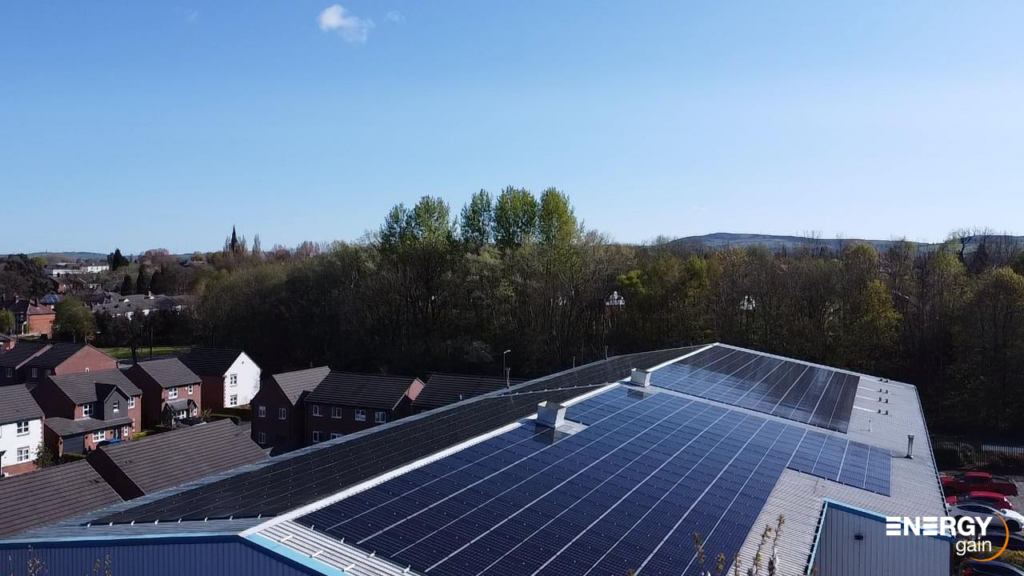
Make use of available commercial and industrial roof space.
Solar Carports
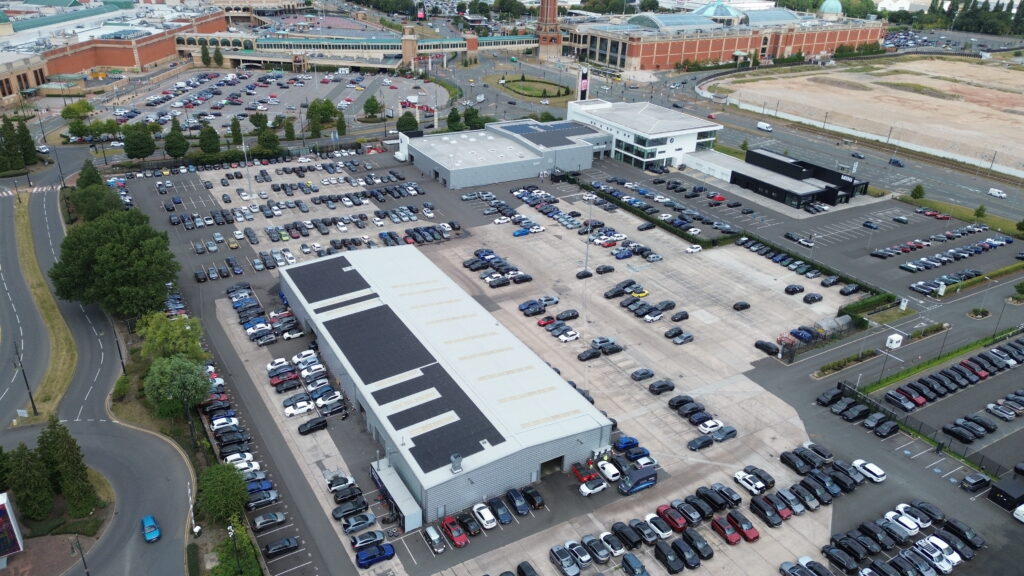
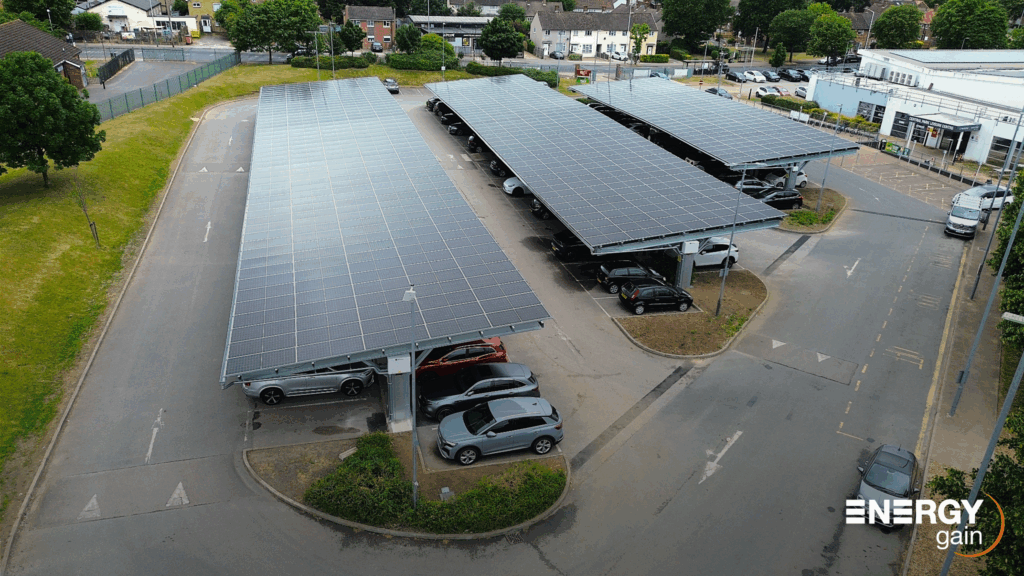
Turn existing parking areas into solar generation space.
Ground-Mounted Solar
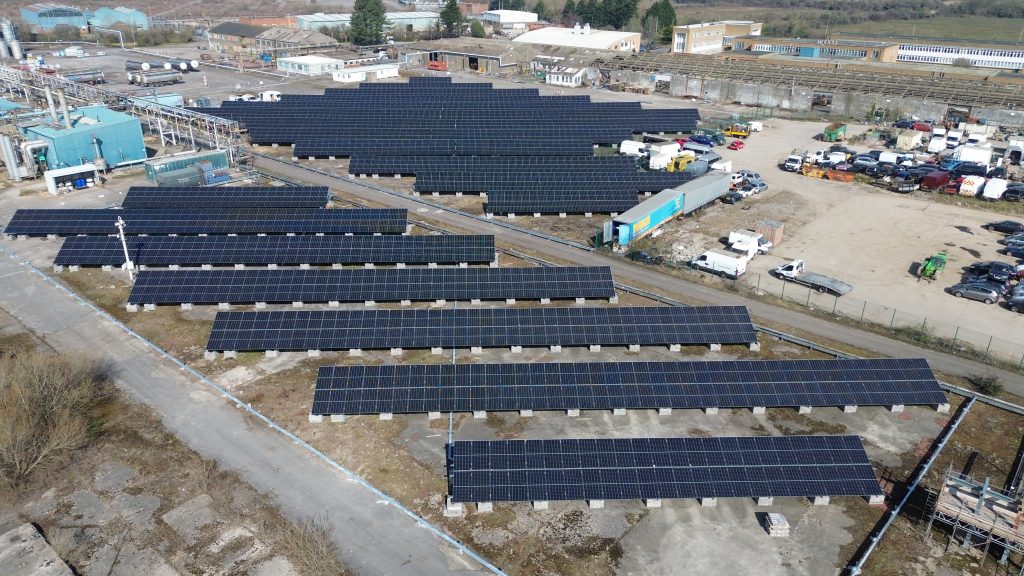
Utilise suitable land where additional generation is required.
EV Charging
Consider future charging demand alongside the site’s wider energy requirements.

Private Wire Solar for Aerospace Sites
For larger aerospace manufacturing facilities, private wire solar may provide another option where suitable land is available away from the main building.
A solar array can potentially be installed in a separate location and connected directly to the site’s electrical infrastructure, subject to engineering, land, planning and network considerations.
The financial and technical assessment should consider:
Current and future electricity consumption
Solar generation and self-consumption
Electricity export
Grid capacity and DNO requirements
Electrical infrastructure and connection costs
Private wire infrastructure and electrical losses
Operational requirements and future expansion
Private wire systems are more complex than standard rooftop installations and require a detailed engineering and financial assessment to establish their suitability.
Aerospace Solar Case Study: The Hyde Group
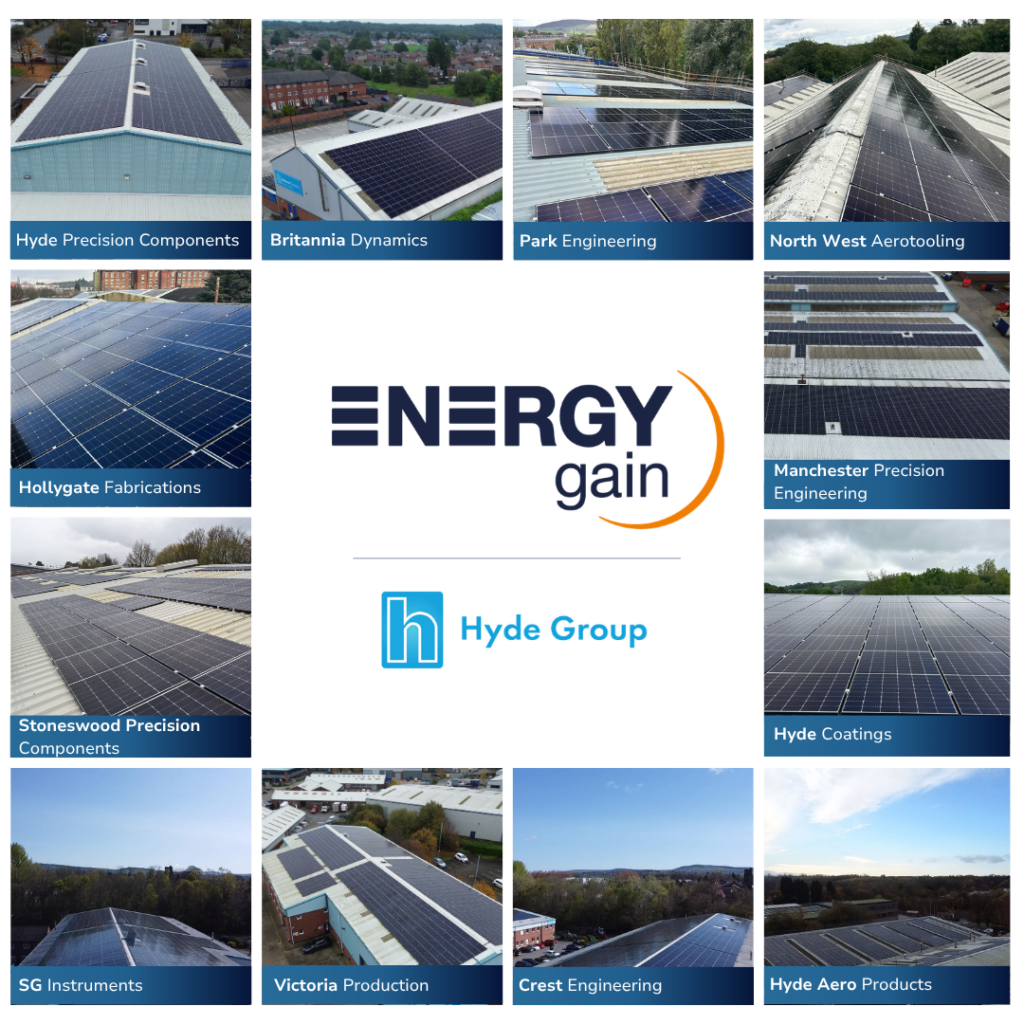
The Hyde Group operates across aerospace, defence and advanced engineering, supplying products and services for demanding industrial applications.
Energy Gain UK has delivered solar PV installations across multiple Hyde Group sites, supporting its ambition to reduce operational carbon emissions and improve energy performance.
One example is SG Instruments in Dukinfield, Greater Manchester, a manufacturer of precision-engineered components serving the aerospace and advanced engineering sectors.
Energy Gain UK installed a 234 kWp rooftop solar PV system, designed to help the business generate renewable electricity on-site and offset a proportion of its electricity consumption.
Project statistics:
System size: 234 kWp
Solar panels installed: 577
Annual generation: 194 MWh
Lifetime generation: 4,572 MWh
Annual CO₂ savings: 41 tonnes
Lifetime CO₂ savings: 960 tonnes
The project demonstrates how commercial solar can support specialist engineering businesses by making effective use of available roof space while contributing to long-term cost management and carbon reduction objectives.
Aerospace Materials Manufacturing: Haynes International
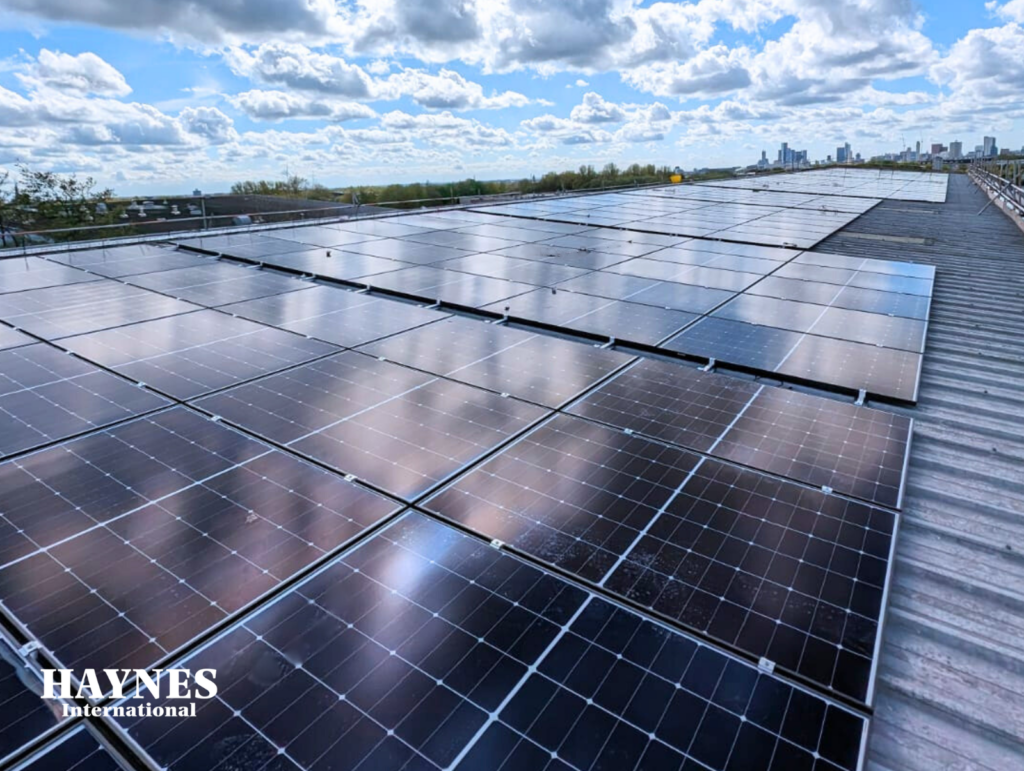
Haynes International manufactures high-performance alloys used in aerospace and other demanding industrial applications. Its work in specialist materials manufacturing makes it a relevant example of the wider aerospace supply chain’s focus on operational efficiency and sustainability.
Energy Gain UK’s experience includes supporting organisations such as Haynes International and the Hyde Group with commercial solar opportunities in aerospace and advanced manufacturing environments.
For businesses operating in specialist manufacturing, solar feasibility assessments need to account for electricity consumption, available roof space, electrical infrastructure and the practical requirements of the site.
A tailored assessment can help establish whether rooftop or ground-mounted solar is suitable and how much of the site’s electricity demand could potentially be met through on-site generation.
Financial Modelling Should Reflect the Real Site
Aerospace manufacturers should base their solar investment decisions on actual electricity consumption and site-specific data wherever possible.
Energy Gain’s financial modelling considers:
Historic electricity consumption and costs
Half-hourly electricity data
Forecast solar generation
System degradation
Maintenance assumptions
Future electricity prices
Self-consumption and export
Available funding options
This produces a financial model that can be used to assess potential cash flows, payback and returns over the operational life of the system.
For a Finance Director or business owner, the key question is:
What return could this investment generate for our business, and what factors could affect that return?
What We Assess
Before recommending a solar system, Energy Gain considers the technical and operational requirements of the site, including:
Electricity consumption and operating patterns
Roof construction and structural capacity
Available roof space or land
Existing electrical infrastructure
Future production and electricity demand
DNO requirements and grid capacity
Planning and site constraints
Installation requirements and potential disruption
This ensures the proposed system is designed around the business rather than a standard system size
The process begins with an assessment of your site’s energy use, available space and future requirements.
Energy Gain’s detailed desktop feasibility study can assess your electricity consumption, half-hourly usage data, roof or land availability, existing electrical infrastructure, grid requirements and potential future demand such as EV charging.
This helps establish whether solar is suitable for the site and identifies the most appropriate solution before progressing to detailed design.

Energy Gain develops a system designed around the site’s specific requirements.
The design considers factors including available roof space, structural requirements, solar generation, self-consumption, export and electrical infrastructure. Detailed financial modelling then assesses the expected investment, savings, payback and long-term returns.
Different system sizes and investment options can be modelled to identify the solution that provides the strongest technical and financial outcome for the business.

Energy Gain manages the delivery of the project from procurement through to construction and commissioning.
Our experienced installation teams work around the operational requirements of the site, with project planning focused on maintaining safety, minimising disruption and delivering the system to the agreed specification.
Once installation is complete, the system is commissioned and handed over with the relevant documentation and performance information

Solar performance doesn’t stop being important once the system is installed.
Energy Gain can monitor system performance to identify potential issues and ensure the installation continues to operate as expected. Performance data can be used to track generation and identify changes that may require investigation or maintenance.
Ongoing maintenance helps protect system performance and maximise the long-term value of the investment

Which Solar Solution Is Right for Your Aerospace Business?
The most suitable solution depends on the individual facility, its energy requirements and available space.
Commercial rooftop solar may be appropriate for manufacturing buildings and warehouses, while ground-mounted systems could be considered where suitable land is available.
The important thing is to assess the options together, taking account of technical feasibility, electricity consumption and financial returns.
Solar for the Future of Aerospace Manufacturing
Aerospace manufacturers are under pressure to remain competitive while managing operating costs and meeting increasingly demanding sustainability expectations.
As production requirements evolve and businesses invest in new equipment or expand their facilities, electricity demand may also change.
Considering these future requirements alongside current consumption can help ensure a proposed solar installation remains appropriate as the business develops.
Calculate Your Aerospace Solar Opportunity
Use our calculators to get an initial indication of the potential opportunity:
The calculators provide an initial indication. A detailed feasibility assessment can use your actual electricity consumption and site information to develop a more tailored financial assessment.
Explore Your Aerospace Solar Opportunity
Energy Gain UK offers a free, detailed desktop feasibility study to assess the potential for commercial solar at your aerospace manufacturing site.
We’ll consider your electricity consumption, site characteristics, available solar solutions and potential financial returns to help establish the technical and commercial opportunity.