
Is Your Commercial Roof Suitable for Solar Panels?
Commercial solar panels can help businesses reduce electricity costs, generate renewable energy and improve the long-term performance of their sites. However, before installing a commercial solar PV system, it is important to establish whether the existing roof is suitable.
For businesses operating warehouses, manufacturing facilities, distribution centres and other large commercial buildings, the roof can offer significant potential for solar generation. Yet factors such as structural strength, roof condition, age, materials and future maintenance requirements all need to be considered before installation begins.
At Energy Gain, we take an engineering-led approach to commercial solar, assessing each site’s requirements to help determine the most appropriate solution.
In this guide, we explain what makes a commercial roof suitable for solar panels, what to consider before installation and how roof refurbishment can help unlock solar potential.
What Makes a Commercial Roof Suitable for Solar Panels?
A commercial roof does not need to be brand new to accommodate solar panels. However, it must be capable of supporting the proposed installation and provide a suitable foundation for the system over its expected lifespan.
Several factors influence whether a roof is suitable for commercial solar panels below.
Roof structure and weight-bearing capacity
One of the first considerations is whether the existing roof structure can accommodate the proposed solar PV system.
Solar panels, mounting equipment, cabling and other components introduce additional loads. The roof must also be assessed against relevant design loads, including wind and snow, alongside the building’s existing structural capacity.
A structural assessment may be required to establish whether the roof can safely accommodate the installation. The outcome will depend on the building’s construction, condition and proposed solar system design.
Where additional reinforcement or structural alterations are necessary, these should be identified during the feasibility and engineering stages.
Roof age and remaining lifespan
The age of a commercial roof is another important consideration.
Solar PV systems are long-term investments, so installing panels on a roof that may require replacement in the near future could lead to additional costs and disruption. Removing and reinstalling solar panels to undertake roofing works can be more complex than addressing roof condition before installation.
Businesses should therefore consider the roof’s remaining service life alongside the anticipated lifespan of the solar PV system.
An older roof is not automatically unsuitable. However, its condition, maintenance history and expected future performance should be assessed before proceeding.
Roof condition, leaks and waterproofing
Existing roof defects can affect the suitability of a building for solar panels.
Common issues to investigate include:
- Water ingress and recurring leaks.
- Damaged roof coverings, fixings or joints.
- Deteriorating waterproofing membranes.
- Corrosion or deterioration of metal roof sheets.
- Ponding water or drainage problems on flat roofs.
- Previous repairs that may affect the proposed mounting arrangement.
These issues should be addressed where necessary before the solar PV system is installed. Solar panels should not be treated as a solution to underlying roofing defects.
For businesses already experiencing leaks or planning a roof replacement, combining roof refurbishment with a commercial solar installation may offer a more practical long-term approach.
Roof type and materials
Different commercial roof types can accommodate solar PV systems, but the mounting method and engineering requirements will vary.
Metal trapezoidal roofs
Trapezoidal metal roofs are commonly found on industrial and manufacturing buildings. Subject to structural suitability and roof condition, they can provide a practical mounting surface for commercial solar panels.
Standing seam roofs
Standing seam metal roofs may accommodate specialist mounting systems designed for the particular seam profile. The attachment method must be appropriate for the roof construction and structural requirements.
Flat roofs
Flat roofs can often accommodate solar panels using appropriately engineered mounting arrangements. Roof loading, wind uplift, drainage, waterproofing and maintenance access are important considerations.
Older or refurbished roofs
Older roofs require careful assessment of their condition, materials and structural capacity. Depending on the findings, refurbishment, replacement or additional structural work may be needed before solar installation.
The most suitable solution depends on the individual building rather than roof type alone.
Roof orientation, shading and available space
The amount of usable roof space and its exposure to sunlight will influence the potential performance of a commercial solar PV system.
During a feasibility assessment, factors to consider include:
- Available roof area for solar panels.
- Orientation and roof pitch.
- Shading from nearby buildings, equipment or roof structures.
- Rooflights, vents and other obstructions.
- Access routes and space required for maintenance.
- Electrical infrastructure and the site’s electricity demand.
A large roof does not automatically translate into a viable solar project. The usable area, expected generation, installation costs and electricity consumption all need to be considered together.
Grid connection and electricity demand
Roof suitability is only one part of determining whether a commercial solar installation is viable.
The site’s electricity consumption profile, existing electrical infrastructure and grid connection requirements can also influence system design and project feasibility.
For example, a manufacturing facility with substantial daytime electricity demand may be well positioned to use a significant proportion of the electricity generated by its solar PV system. However, this must be confirmed using the site’s actual consumption data and proposed system design.
Understanding these factors early helps businesses make informed decisions about system size, potential savings and financial returns.
Can You Install Solar Panels on an Old Commercial Roof?
Yes, older commercial roofs can accommodate solar panels if their structure, condition and materials are suitable for the proposed installation.
An assessment may identify that the roof can proceed without major works, requires local repairs or structural reinforcement, or would benefit from refurbishment or replacement.
Businesses should consider the roof’s remaining service life alongside the expected lifespan of the solar PV system. Addressing necessary roofing works before installation can help avoid the additional cost and disruption of removing and reinstalling panels later.
What If Your Commercial Roof Contains Asbestos?
Some older industrial and commercial buildings have asbestos-containing roofs. Before considering solar installation or refurbishment, the material and its condition must be assessed by a competent specialist.
The appropriate approach may involve managing the material in place, a suitable overcladding system or roof replacement, depending on the circumstances. Any work must comply with applicable asbestos regulations and be undertaken by appropriately competent specialists, with licensed contractors where legally required.
Energy Gain UK – Client Example
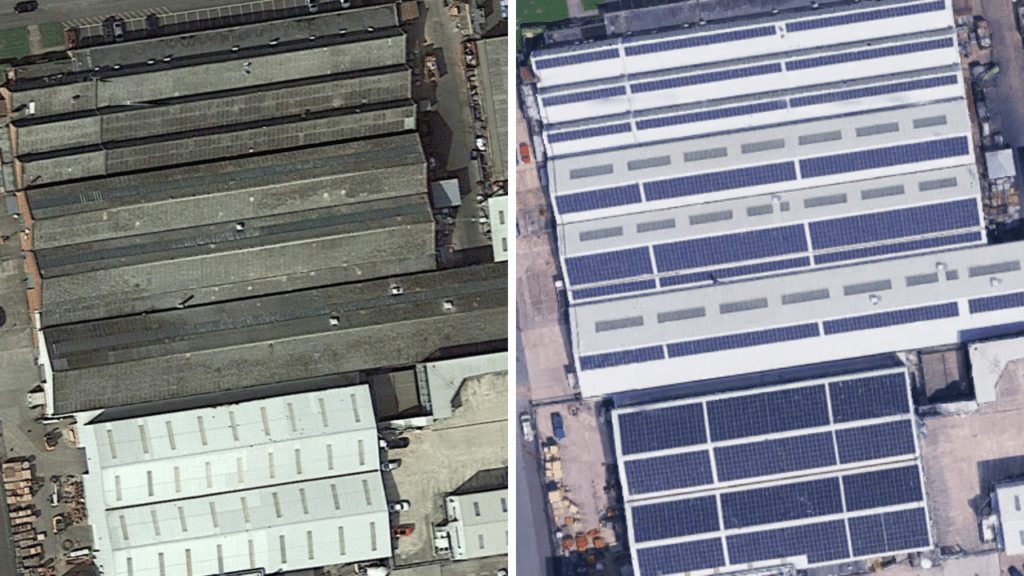
The image below shows how this approach was applied on a project for a large manufacturing client in Stoke-on-Trent.
The existing asbestos-containing roof was upgraded, with the new roof providing the platform for a commercial solar PV installation.
The project demonstrates how necessary roof investment can be considered alongside solar from the outset, helping the business assess the combined technical and financial opportunity rather than treating the two projects separately.
Should You Replace Your Commercial Roof Before Installing Solar Panels?
Not every commercial building needs a new roof before solar installation. However, refurbishment or replacement may be worth considering where the roof is deteriorating, leaks are recurring or its remaining lifespan is inconsistent with the planned solar investment.
Coordinating the two projects can help businesses:
Address roofing defects before solar installation.
Align roof design with solar mounting and structural requirements.
Reduce the risk of disruption from future roof replacement.
Assess the combined investment as part of a longer-term site strategy.
The right approach depends on the roof’s condition, structural requirements and overall project costs. Energy Gain UK’s commercial roof refurbishment specialists can help businesses explore the options alongside their solar requirements.
How Can Solar Help Pay for a Commercial Roof Upgrade?
When a commercial roof needs replacing, combining the refurbishment with a solar PV installation may help businesses assess the costs and potential benefits of both investments together.
Solar panels generate electricity that can be used on-site, reducing the amount purchased from the grid. For businesses with substantial daytime electricity demand, these savings may contribute towards the combined investment over time.
However, solar savings will not necessarily cover the cost of the roof upgrade. The business case depends on factors including refurbishment costs, solar system size, electricity tariffs, expected generation, self-consumption and financing.
A detailed feasibility assessment can help businesses compare the investment costs with projected electricity savings and understand the potential long-term financial return
Case Study: MI Vehicle Integration
Case Study: Combining Roof Refurbishment and Commercial Solar at MI Vehicle Integration
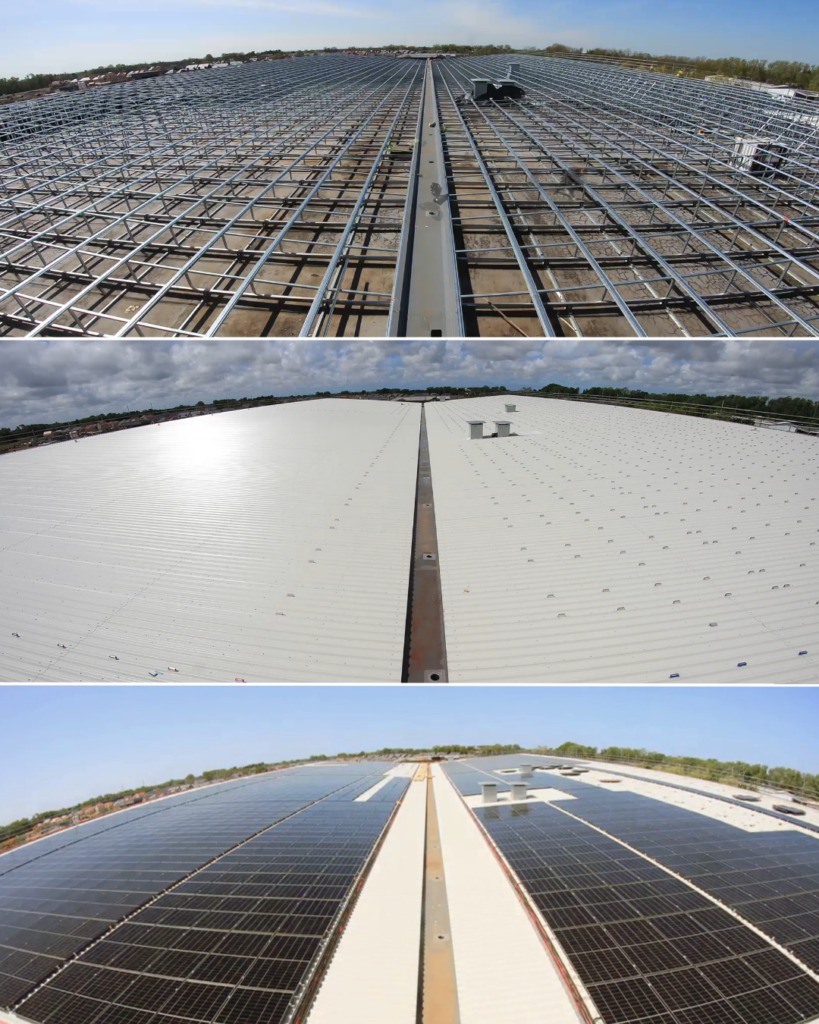
MI Vehicle Integration’s manufacturing facility in Leyland, Preston, demonstrates how roof refurbishment and commercial solar can be delivered as part of a coordinated project.
Before the solar PV installation began, the client was experiencing ongoing roof leaks. Rather than installing solar panels onto the existing roof, the project incorporated a roof upgrade to address the underlying issues.
The existing flat roof was replaced with a pitched trapezoidal roof system, engineered to be constructed over the existing structure. This provided a durable, weather-resistant roofing solution while helping minimise disruption to the building.
Following completion of the roof works, Energy Gain UK installed a 940 kWp commercial rooftop solar PV system.
Project highlights:
- System capacity: 940 kWp
- Number of solar panels: 1,774
- Annual electricity generation: Approximately 737 MWh
- Projected lifetime generation: More than 17,285 MWh
- Estimated lifetime CO₂ savings: 3,060 tonnes
- Technology: SolarEdge fully optimised inverters
- Compliance: RC62 compliant system
The project brought together roof refurbishment and renewable electricity generation, addressing the client’s roofing requirements while supporting its wider energy objectives.
The new trapezoidal roof provided the basis for the subsequent solar installation, demonstrating the importance of considering roof condition and solar engineering together.
For businesses with ageing industrial roofs, existing leaks or planned building refurbishment, this type of coordinated approach may be worth exploring as part of a wider site investment.
How Does Energy Gain UK Assess Commercial Roof Suitability?
At Energy Gain UK, commercial solar projects are approached from an engineering perspective. The aim is to establish whether a site is suitable, identify relevant constraints and assess the potential benefits before a business commits to installation.
A commercial solar feasibility assessment can consider:
Initial site and roof information
The building’s roof type, approximate age, condition, available space and any known structural or maintenance issues help establish the initial requirements.
Structural and technical considerations
Relevant structural information, roof loading, mounting arrangements and electrical infrastructure are considered as part of determining the requirements for the proposed installation. Further surveys or specialist assessments may be necessary.
Energy consumption and generation potential
The site’s electricity usage, available roof area and anticipated solar generation help inform the proposed system size and how much of the generated electricity the business may be able to use.
Financial feasibility
The assessment can consider indicative installation costs, projected electricity savings, return on investment and longer-term cash flow, using the available site and energy data.
Recommendations for next steps
Where the roof is suitable, the project can progress towards detailed design and installation. Where refurbishment or additional investigation is needed, these requirements can be considered before the solar installation proceeds.
Energy Gain UK offers a free, detailed desktop feasibility study, including a 25-year cash-flow analysis, to help businesses understand their site’s suitability and potential financial benefits.
Is Your Commercial Roof Ready for Solar?
Before investing in commercial solar panels, it is important to understand whether your roof is suitable or whether refurbishment should be considered first.
Energy Gain UK delivers engineering-led commercial solar PV projects across the UK, helping businesses assess roof requirements, electricity demand and potential financial returns.
Planning a solar installation for your warehouse, factory or commercial building?
Request a free commercial solar feasibility study to explore your site’s potential, projected savings and recommended next steps.
Email: info@energygain.co.uk
You can also visit our Commercial Solar Academy for further guidance.
