
cOMMERCIAL SOLAR FOR the Manufacturing Sector
Energy Gain UK delivers commercial solar solutions for manufacturers across the UK, helping reduce electricity costs, lower operational carbon emissions and support long-term business resilience.

Reduce Energy Costs
Generate electricity on-site to help reduce grid electricity consumption and manage long-term operating costs.
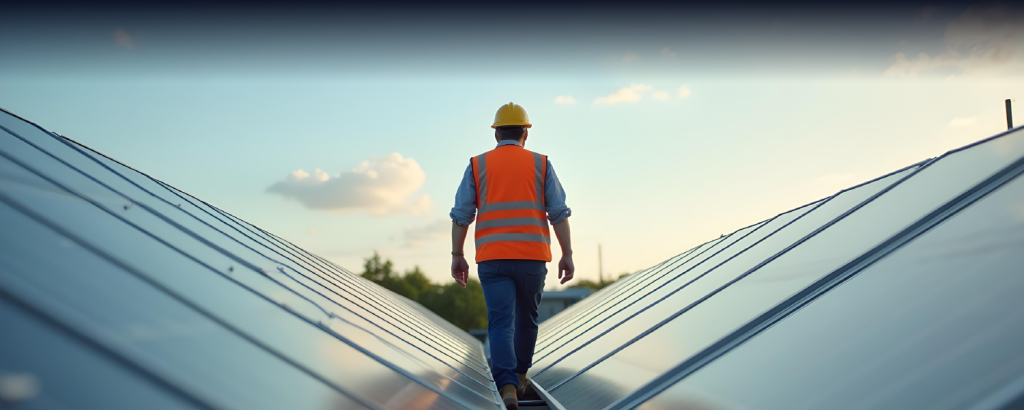
Support Sustainable Manufacturing
Reduce operational carbon emissions and support environmental commitments across manufacturing and industrial operations.
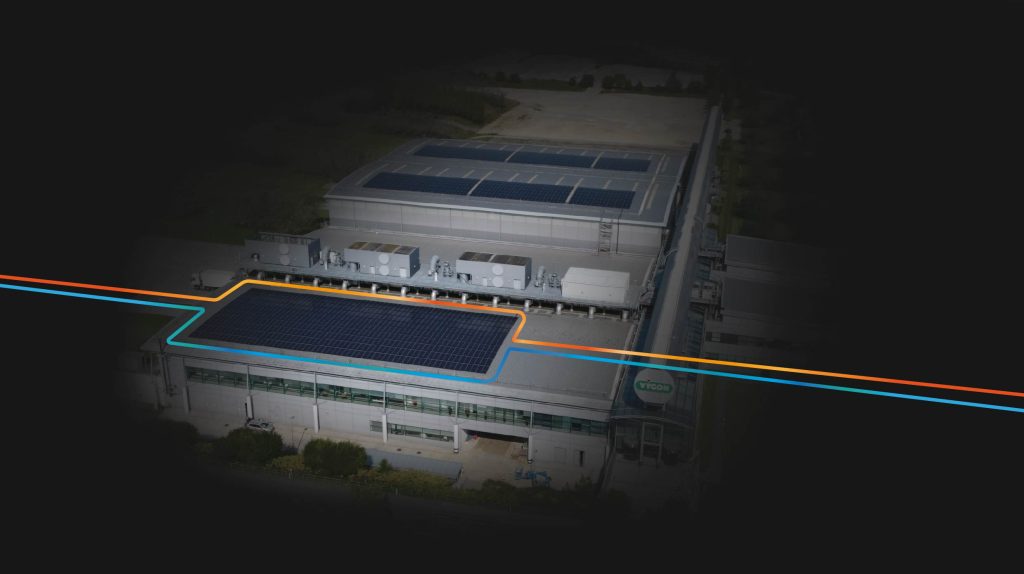
Make Better Use of Industrial Roof Space
Explore commercial rooftop solar and ground-mounted systems designed around your facility, electricity demand and available space.

Commercial Solar for Manufacturing
Manufacturing businesses rely on electricity to power production machinery, automated processes, compressed air systems, lighting, ventilation and other essential equipment. For energy-intensive facilities, these requirements can make electricity a significant operating cost.
Commercial solar PV gives manufacturers the opportunity to generate renewable electricity directly at their facilities, helping reduce reliance on grid electricity and improve control over long-term energy expenditure.
Large factories and industrial buildings can also offer substantial roof space for solar installations. Where electricity demand aligns with daylight generation, businesses may be able to use a significant proportion of the electricity generated on-site.
Energy Gain UK delivers engineering-led commercial solar projects, assessing each facility’s electricity consumption, roof suitability, electrical infrastructure, operational requirements and financial objectives before recommending a solution.
The Energy Challenge for Manufacturers
Manufacturing facilities vary considerably, from precision engineering and component production to plastics, timber products, metal fabrication and large-scale industrial processing.
Despite these differences, many manufacturers share common challenges: managing energy costs, maintaining production efficiency and reducing environmental impact without compromising operational performance.
Electricity demand can come from machinery, production lines, robotics, extraction systems, compressors, lighting and building services. Some facilities operate across multiple shifts, creating sustained electricity demand throughout the day.
Solar PV can help meet a proportion of this demand using electricity generated directly at the site. The potential benefits depend on the facility’s consumption profile, available space, system design and ability to use the electricity as it is generated.
For manufacturers, the objective is not simply to install the largest possible system. It is to develop a technically suitable installation that supports production requirements and delivers a credible financial return.
The Cost of Doing Nothing
Continuing to purchase all electricity from the grid means manufacturers miss opportunities to generate their own renewable power and reduce their exposure to electricity costs.
For businesses with substantial and sustained electricity requirements, this can represent a missed opportunity to improve cost control and reduce operational emissions.
Commercial solar should be assessed as a long-term investment, considering installation costs, expected generation, on-site electricity use, maintenance requirements and projected financial returns.
A detailed feasibility study can help establish whether a solar installation is technically appropriate and financially viable before a business commits to the project.
Solar Solutions for Manufacturing Sites
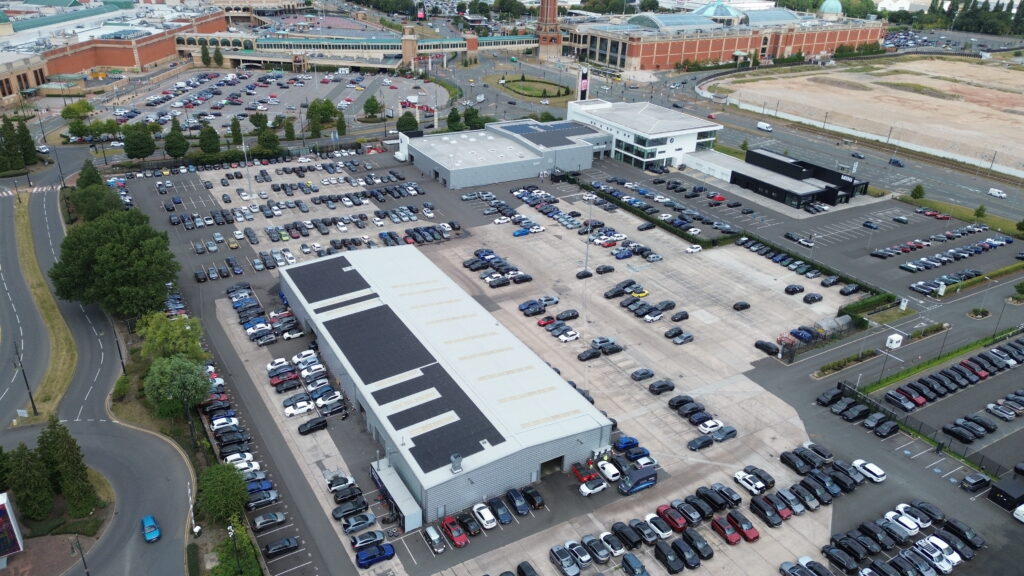
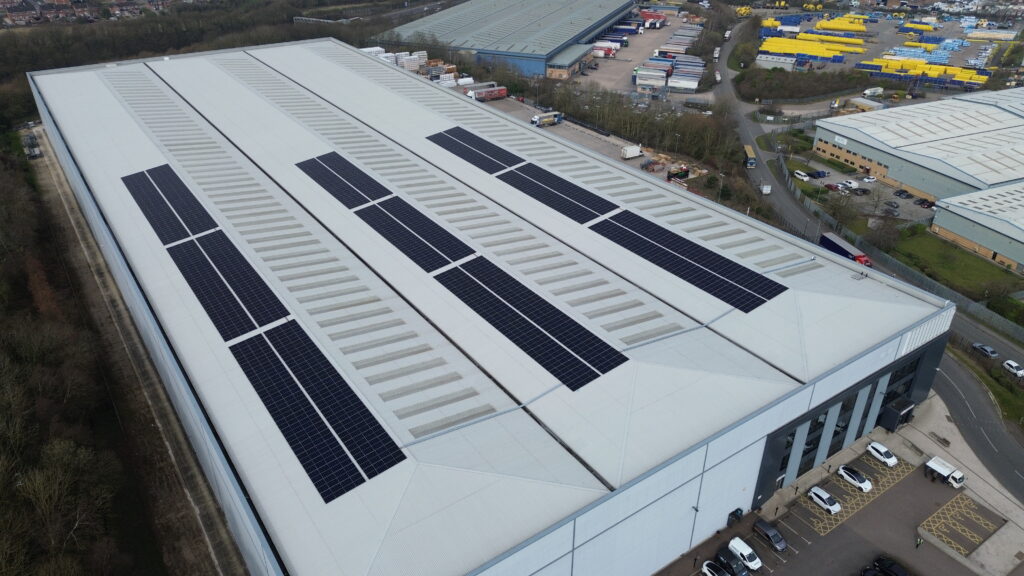
Rooftop Solar
Make use of available commercial and industrial roof space.
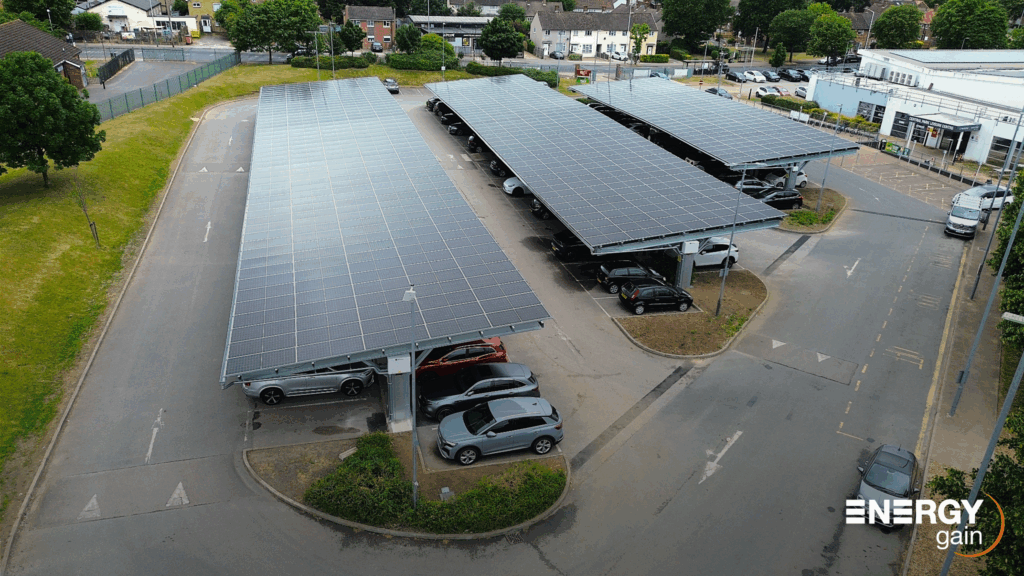
Solar Carports
Turn existing parking areas into solar generation space.
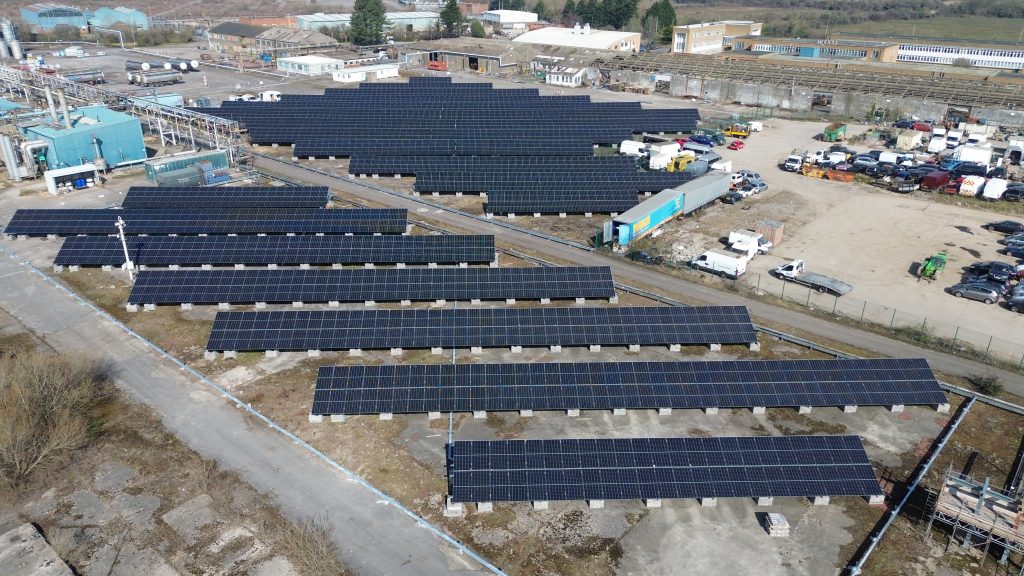
Ground-Mounted Solar
Utilise suitable land where additional generation is required.
solar calculators
Use our solar calculators to estimate potential savings

Archwood Group – 945kWp Commercial Solar Installation
Energy Gain UK designed and delivered a 945kWp solar PV installation at Archwood Group’s head office and manufacturing facility in Chirk, North Wales.
Archwood manufactures and supplies timber products for the interiors and home improvement sectors. Following a site energy audit, solar PV was identified as a preferred solution to help reduce carbon emissions and improve energy resilience.
The project was engineered around the facility’s electricity requirements and operational needs, with installation activities coordinated to minimise disruption to manufacturing operations.
The completed system generates renewable electricity on-site, helping reduce reliance on grid electricity while supporting the company’s longer-term sustainability objectives.
Project highlights
System size: 945kWp
Solar panels: 2,520
Annual generation: approximately 745MWh
Annual CO₂ savings: approximately 157 tonnes
Lifetime CO₂ savings: approximately 3,670 tonnes

CNC Speedwell – 2,139kWp Manufacturing Solar Installation
Energy Gain UK delivered a 2,139kWp commercial rooftop solar PV installation across two buildings at CNC Speedwell’s manufacturing facility in Brownhills, West Midlands.
Part of the Castings PLC Group, CNC Speedwell manufactures machined and assembled components for the commercial vehicle and automotive industries. Its extensive machining and production operations create significant electricity requirements.
The installation comprises 4,399 solar panels across the CNC 1 and CNC 3 buildings. Delivering a project of this scale required detailed engineering and coordination around an active manufacturing environment, including site access, installation sequencing and electrical infrastructure.
The completed system is expected to generate substantial renewable electricity on-site, helping reduce grid electricity consumption and support the company’s environmental objectives.
Project highlights
System size: 2,139kWp
Solar panels: 4,399
Annual generation: approximately 1,673MWh
Annual CO₂ savings: approximately 320 tonnes
Lifetime CO₂ savings: approximately 7,504 tonnes

Eurocell PLC – Commercial Solar for Manufacturing
Energy Gain UK was appointed to deliver a 600kWp commercial rooftop solar PV installation across two of Eurocell PLC’s facilities in the East Midlands.
Eurocell manufactures, distributes and recycles PVC-U windows, doors and building products. The project supports the company’s sustainability ambitions by generating renewable electricity at its facilities, helping reduce operational emissions and electricity costs.
The installation required the solar system to be designed around the available roof space, electrical infrastructure and operational requirements of the manufacturing and distribution sites.
By generating electricity on-site, the installation helps Eurocell reduce reliance on imported grid electricity and contributes to its wider sustainability strategy.
Project highlights
System size: 600kWp
Solar panels: 1,364
Annual generation: approximately 532MWh
Annual CO₂ savings: approximately 112 tonnes
Lifetime CO₂ savings: approximately 2,624 tonnes
Planning Solar for Manufacturing Facilities
A successful manufacturing solar project needs to consider more than the available roof area. The design must reflect the building’s characteristics, electricity demand and the practical requirements of an operational industrial site.
Energy Gain can assess:
Electricity consumption: Review usage patterns, production schedules and the potential to use solar generation directly.
Roof and structural suitability: Assess roof condition, available space, structural capacity and any relevant constraints.
Production operations: Consider machinery, shift patterns and operational requirements when assessing system size and expected self-consumption.
Electrical infrastructure: Review existing electrical systems, connection requirements and potential grid export constraints.
Installation planning: Coordinate access, deliveries, lifting operations and installation activities around ongoing operations.
Financial viability: Model system costs, expected generation, potential savings and projected long-term returns.
Ongoing performance: Consider monitoring and maintenance requirements to support the system throughout its operational life.
Every site should be assessed individually to establish the most suitable technical and financial approach.
Financial Modelling Should Reflect Your Operations
The financial benefits of commercial solar depend on how much electricity a system generates and how much of that electricity the business can use.
Manufacturers with substantial daytime electricity consumption may be well positioned to use solar generation directly within their operations. However, the best system size will depend on the site’s consumption profile, available roof space, electricity costs and other technical considerations.
Energy Gain UK’s free, detailed desktop feasibility study can assess available electricity consumption data, potential system capacity, expected generation, installation costs, potential savings and projected financial returns over a 25-year period.
This helps businesses understand the opportunity before progressing to detailed design and installation.
What We Assess
Before recommending a solar system, Energy Gain considers the technical requirements of the site, including:
- Electricity consumption and operating patterns
- Roof construction and structural capacity
- Available roof or land
- Existing electrical infrastructure
- EV charging requirements
- Future electricity demand
- DNO and grid capacity
- Planning and site constraints
This ensures the proposed system is based on the requirements of the business rather than a standard system size.
The process begins with an assessment of your site’s energy use, available space and future requirements.
Energy Gain’s detailed desktop feasibility study can assess your electricity consumption, half-hourly usage data, roof or land availability, existing electrical infrastructure, grid requirements and potential future demand such as EV charging.
This helps establish whether solar is suitable for the site and identifies the most appropriate solution before progressing to detailed design.

Energy Gain develops a system designed around the site’s specific requirements.
The design considers factors including available roof space, structural requirements, solar generation, self-consumption, export and electrical infrastructure. Detailed financial modelling then assesses the expected investment, savings, payback and long-term returns.
Different system sizes and investment options can be modelled to identify the solution that provides the strongest technical and financial outcome for the business.

Energy Gain manages the delivery of the project from procurement through to construction and commissioning.
Our experienced installation teams work around the operational requirements of the site, with project planning focused on maintaining safety, minimising disruption and delivering the system to the agreed specification.
Once installation is complete, the system is commissioned and handed over with the relevant documentation and performance information
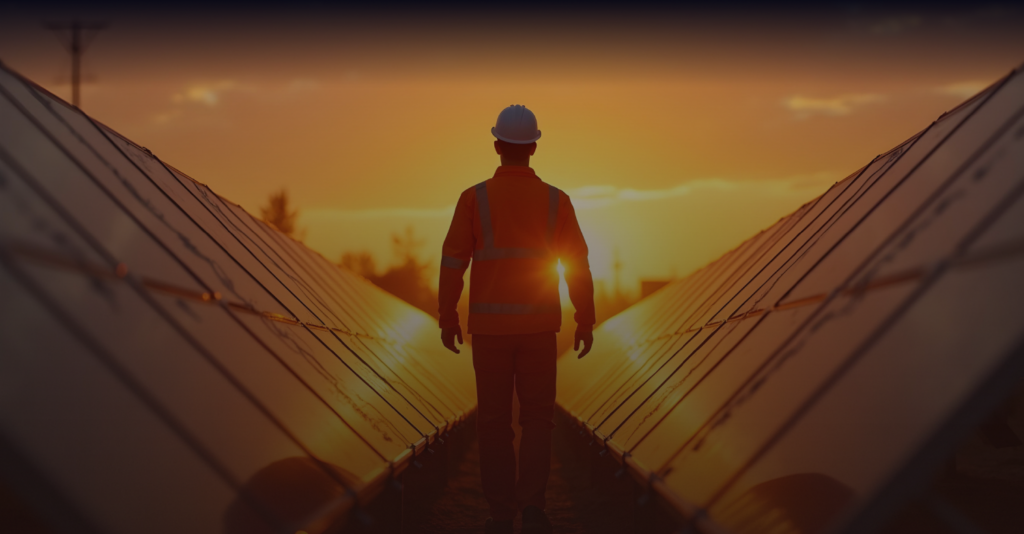
Solar performance doesn’t stop being important once the system is installed.
Energy Gain can monitor system performance to identify potential issues and ensure the installation continues to operate as expected. Performance data can be used to track generation and identify changes that may require investigation or maintenance.
Ongoing maintenance helps protect system performance and maximise the long-term value of the investment

Which Solar Solution Is Right for Your Manufacturing Business?
The most suitable solution depends on your facility, electricity demand, available space and investment objectives.
A rooftop solar installation may suit a factory with extensive usable roof space and significant daytime electricity consumption. Where suitable land is available, a ground-mounted system may provide additional generation capacity.
For businesses operating multiple manufacturing sites, a phased assessment can help identify the strongest opportunities and prioritise investment according to technical suitability and potential returns.
Calculate Your Solar Opportunity
Use our solar calculators to estimate potential savings and compare the long-term cost of installing solar with continuing to buy electricity from the grid.
Explore Your Manufacturing Solar Opportunity
Energy Gain UK delivers commercial solar PV projects for manufacturers and industrial businesses across the UK.
We can undertake a free, detailed desktop feasibility study to assess the potential for solar at your facility, considering electricity consumption, available space, technical requirements and projected financial returns.
Whether you operate a single factory or manage multiple manufacturing sites, our team can help establish the next steps.